

Will an ALR Projector Screen Fix a Bright Room
-
 author
 - August 20, 2026
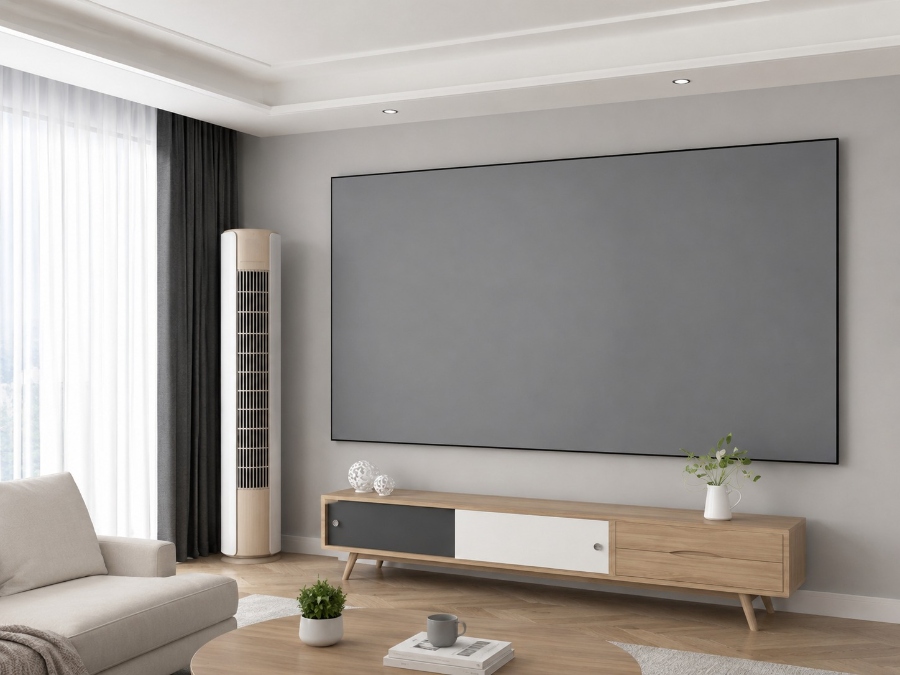
A projector can look vivid after sunset and strangely flat at lunch, even when its brightness setting never changed. That gap leads many homeowners to expect a special screen to rescue every bright room. An ALR surface can protect contrast when light arrives from the directions it is designed to suppress, but it cannot cancel sunlight or repair a mismatched projector. The useful question is not simply whether ALR works. It is whether the screen, light, projector, and seats form a workable system in your room.
What ALR Can Actually Change
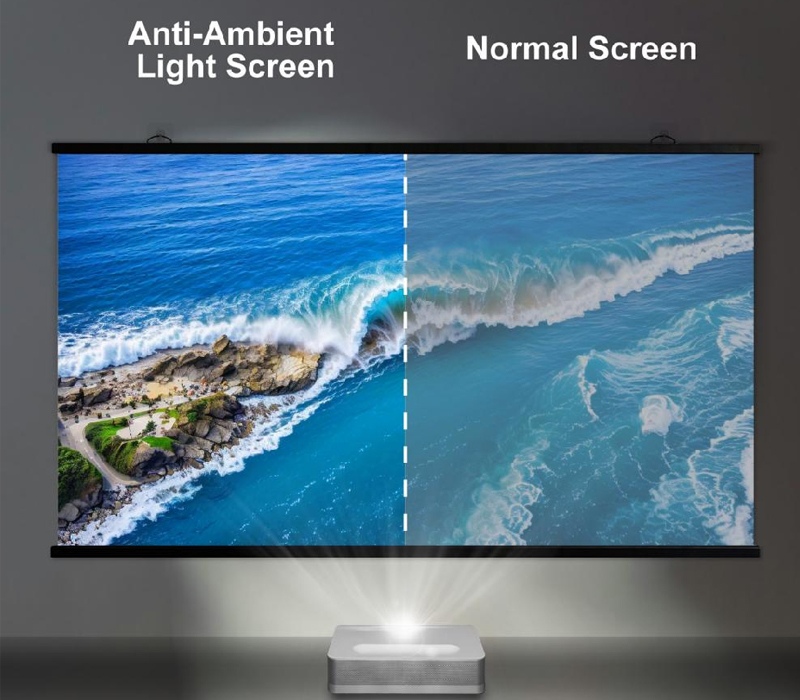
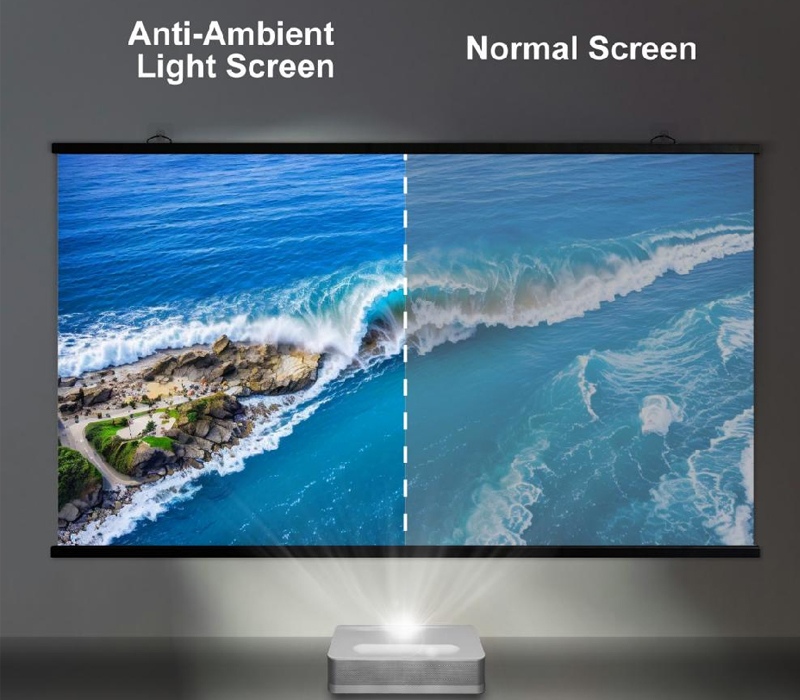
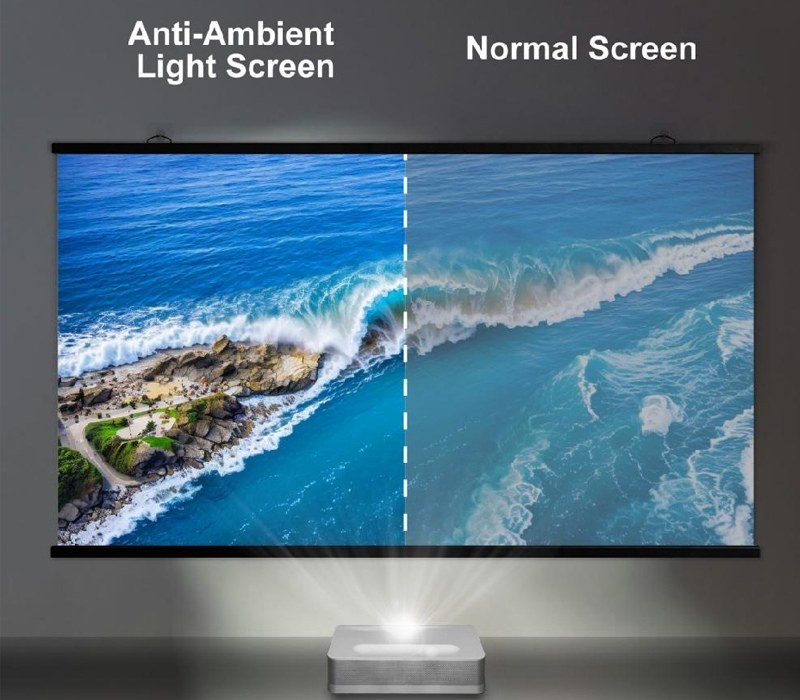
A screen redirects light; it does not delete it. An ambient light rejecting projector screen uses an optical surface to send more projected light toward viewers while diverting light arriving from other directions. That can keep dark areas from turning gray when lamps are on. The effect is conditional because light arriving from the projector direction is harder to separate.
This directional behavior explains why an ALR screen can impress in one living room and disappoint in another. A ceiling lamp, side window, and projector do not strike the surface at the same angles. Once their paths overlap, even a carefully engineered surface has less room to distinguish picture light from room light.
Trace the light before comparing screens
Room observation should come before a product label. Watch the wall at the brightest time you expect to view, then note where the strongest light originates. A soft glow from the side is a different problem from a sunbeam landing directly on the image. Curtains, lamp placement, or moving the screen to another wall may improve the picture more than choosing a more aggressive surface.
Match the optical direction to the projector
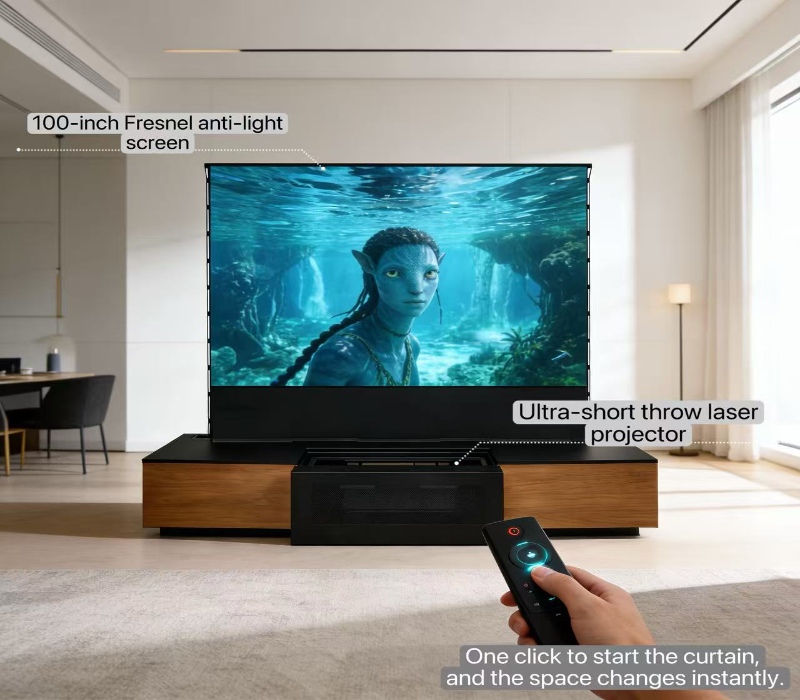
Projector throw is part of the match because ALR surfaces are not interchangeable. A Fresnel surface designed around an ultra-short-throw projector receives light from below and close to the screen. A surface intended for a longer throw manages a different angle. Installing either upside down or pairing it with the wrong light path can send useful light away from the seats.
1.Observe the screen wall in the morning, afternoon, and evening.
2.Mark windows, ceiling lights, and reflective pale walls near the image.
3.Record the projector position and whether it is ultra-short-throw or long-throw.
4.Check the picture from the center seat and the widest normal viewing position.
Where the Room Makes or Breaks the Result
The best projector screen for ambient light is the one designed for the light pattern you actually have. General words such as “daylight” or “high gain” do not reveal whether a screen rejects overhead light, side light, or both. The table below turns common room patterns into a more useful first decision.
| Room pattern | Likely viewing effect | Sensible response |
| Side or ceiling light; no sun on screen | ALR can preserve more perceived contrast | Match surface direction and projector throw |
| Direct sun reaches the image | Washed areas can remain visible | Shade the window or relocate the screen |
| Mostly dark evening viewing | A white or gray screen may already work well | Compare both surfaces before paying more |
| Seats spread far to each side | Brightness may look less uniform off-axis | Test the normal edge seats before deciding |
Direct sunlight is the clearest warning sign because it carries far more competing light than an ordinary lamp. A projector screen for bright room use can improve a workable image, but it is not a substitute for blinds when the sun hits the viewing surface. That distinction prevents a sensible screen upgrade from being asked to solve an architectural problem.
Daytime Viewing Depends on Placement
Daytime performance becomes easier to judge when the screen is tested in its intended position. ALR projector screen daytime viewing should be checked with the normal curtains, lamps, projector mode, image size, and seats in use. A bright demo in a dark showroom cannot answer what the family will see beside a window at two in the afternoon.
Image size also changes the result because the projector output is spread over a larger area. If a 100-inch picture looks convincing but a 120-inch picture looks thin, the screen alone may not be the limiting factor. Test the size you plan to keep, and avoid evaluating only vivid animation; dark film scenes and subtitles reveal weak contrast more quickly.
The Screen Format Changes the Tradeoff
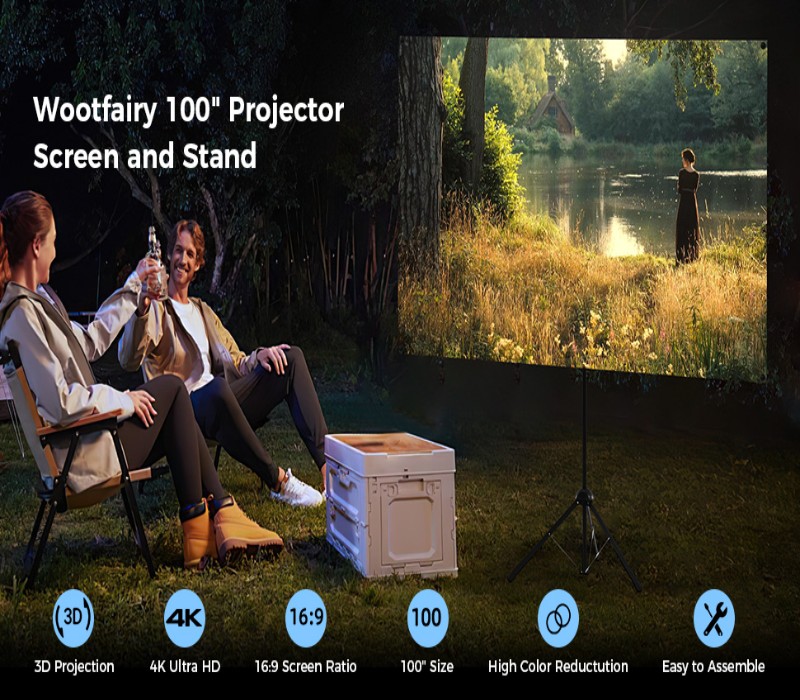
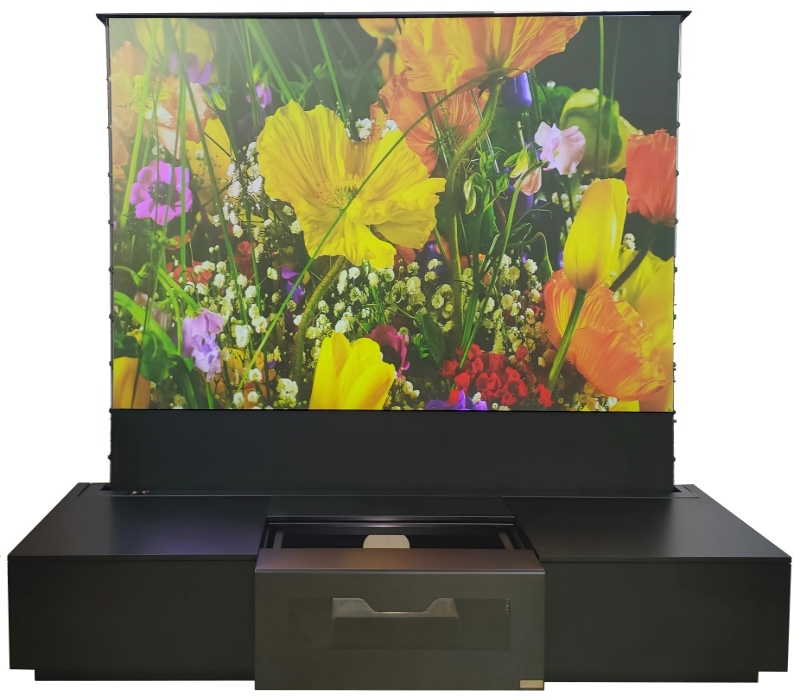
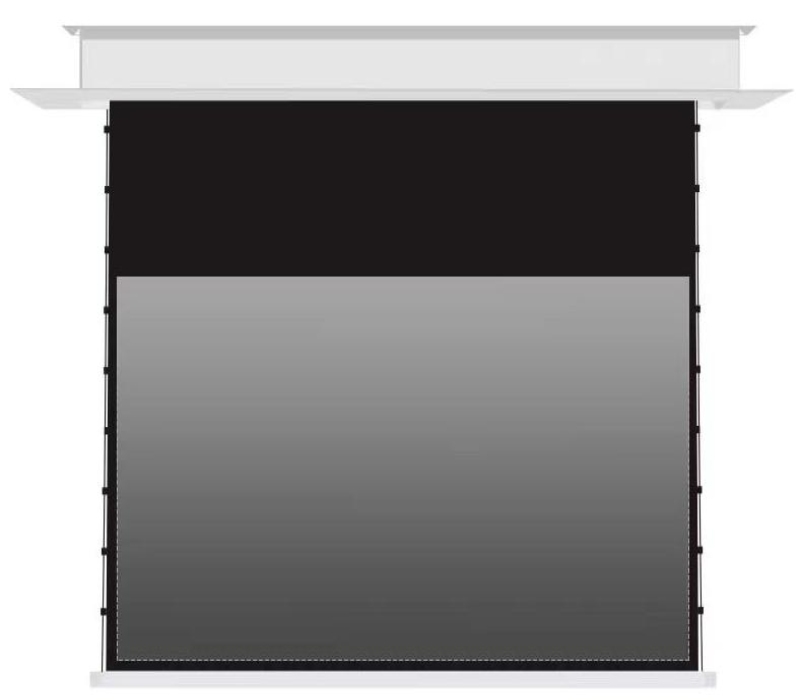
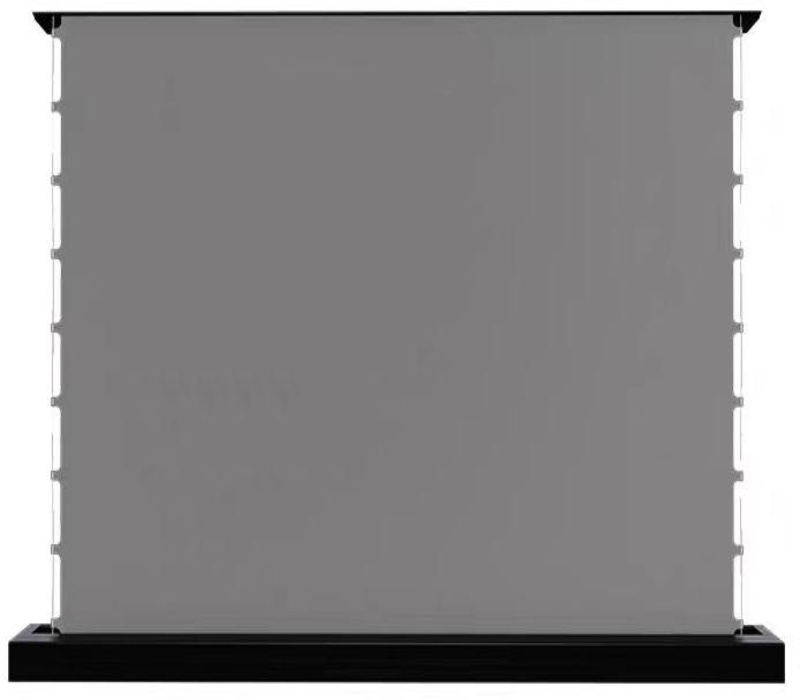
Format should follow how permanently the room can commit to projection. A fixed frame suits a wall reserved for viewing, a portable Fresnel frame can serve renters, and a rising design clears the wall when it is closed. Each option still depends on accurate projector alignment.
Permanent rooms favor repeatable geometry
A fixed installation reduces daily setup but commits the furniture and sightlines to one wall. Tape the proposed image outline in place and sit in every regular seat before mounting it.
Flexible rooms need a setup people will repeat
A removable or rising format earns its place only when deployment feels manageable. Aoxing illustrates the range with a portable Fresnel screen and a smart cabinet combining a UST projector, sound, control, and a floor rising projector screen. Favor the format the household will align and use consistently.
A Home Trial Beats a Label
A short room trial can settle an ALR screen vs white debate. Place material samples on the intended wall and view the same scenes without changing projector settings. Check faces, black bars, subtitles, and the widest seats. A sample cannot prove full-screen uniformity, but it can reveal color tint, sparkle, and off-axis dimming.
The Useful Answer Is Conditional
An ALR projector screen can make a bright living room more usable when ambient light arrives from manageable directions and the surface matches the projector. It cannot overpower direct sun, correct poor alignment, or guarantee the same view from every seat. Map the room, control the strongest light, confirm projector throw, and test the intended size before deciding.
FAQ
Does an ALR screen work in daylight?
It can preserve contrast in daylight when windows do not send direct sun onto the image and the screen is designed for the projector angle. Blinds are still valuable because an ALR surface manages light direction rather than eliminating all room light.
Can an ALR screen reject direct sunlight?
No screen should be expected to make direct sunlight harmless. Shade or redirect the sun first, then judge whether the remaining ambient light is manageable for the projector and screen combination.
Is an ALR screen always better than a white screen?
No. A white screen can provide a broad, even image in a light-controlled room, while a directional ALR surface may trade some viewing-angle freedom for contrast under ambient light. The better choice depends on the room.
Can any projector use the same ALR material?
No. Some optical surfaces are designed for ultra-short-throw light arriving steeply from below, while others suit longer throws. Confirm projector compatibility and the marked screen orientation before installation.
Does projector brightness still matter with ALR?
Yes. The screen does not create projector light, and a larger image spreads the available output over more area. Evaluate brightness together with image size, room light, viewing mode, and seating position.
Recent Posts
-
 Floor-Rising Projector Screens for Distributor OEM OrdersOctober 22, 2026
 -
 Projector Screen Materials for Real AV RoomsOctober 14, 2026
 -
 How to Test an ALR Screen Before Bulk OrderingOctober 7, 2026
RELATED PRODUCTS
Your right choice today, our resplendent tomorrow!
REQUEST A PROJECT QUOTE