

How Does ALR Projector Screen Daytime Viewing Work
-
 author
 - July 16, 2026
Introduction
Daytime projection remains a major challenge in modern home cinema. People desire a huge display for movies, gaming, sports, and streaming. However, they refuse to transform their everyday living spaces into pitch-black rooms. Because of this demand, ALR projector screen daytime viewing has shifted from a rare AV concept into a standard requirement. Homeowners, distributors, smart furniture vendors, and installation teams now expect this capability.
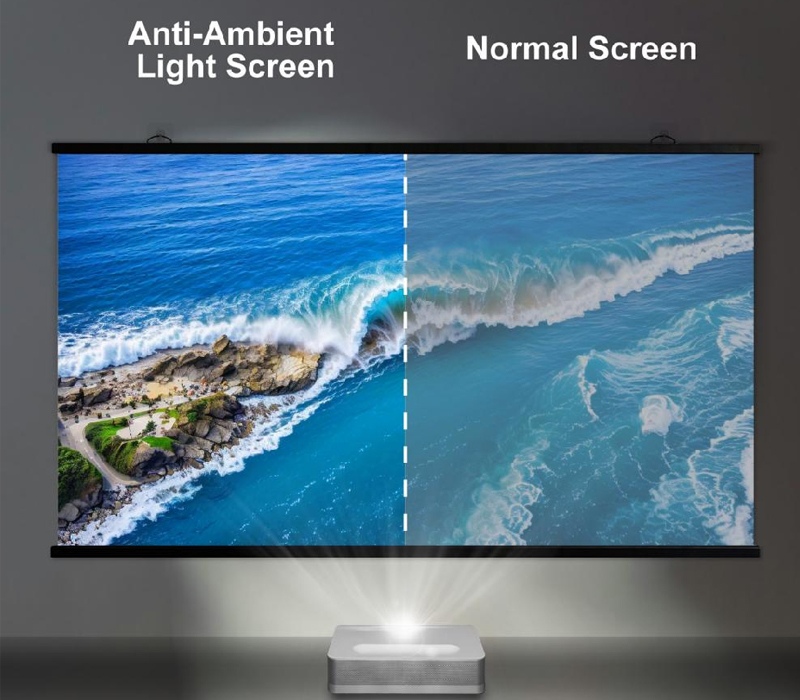
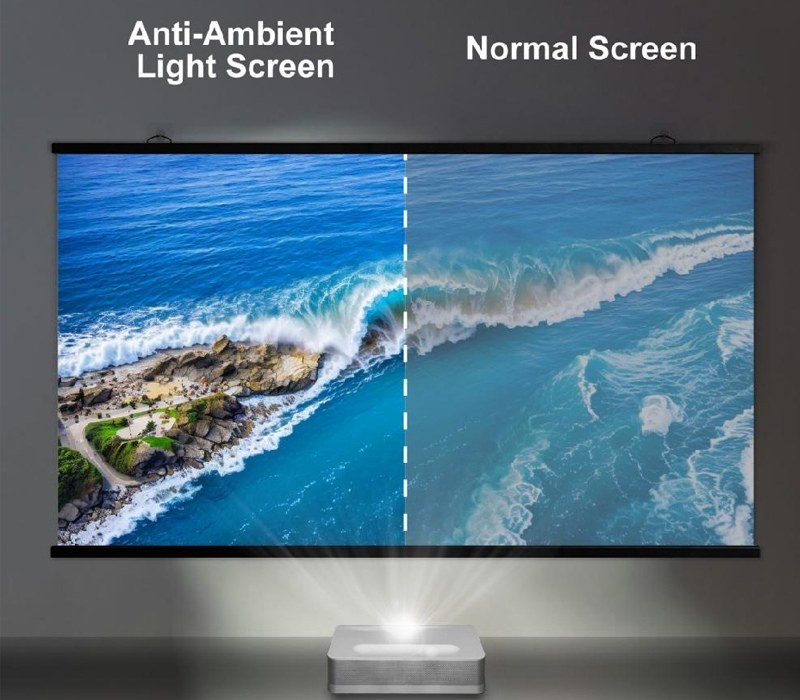
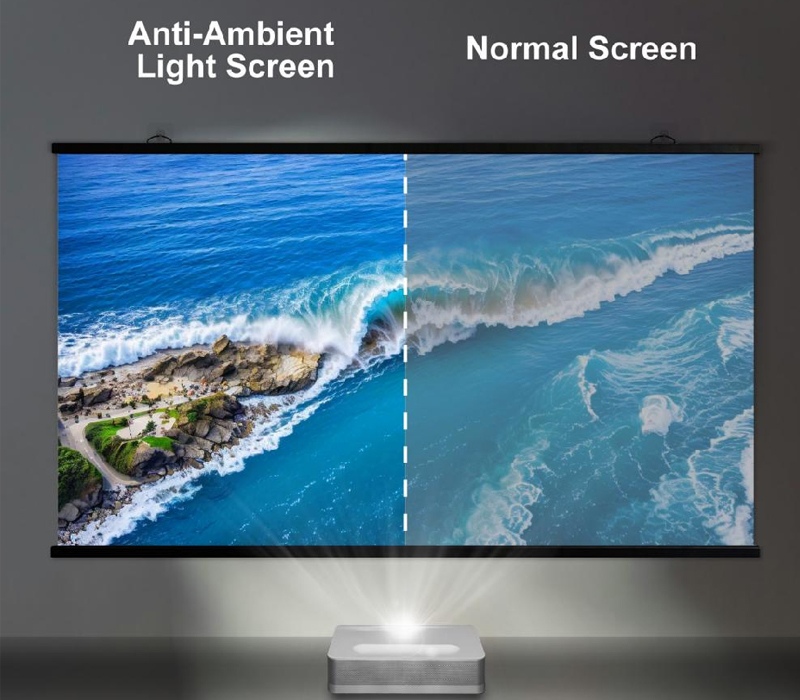
The ALR screen’s full form is Ambient Light Rejecting Screen. Practically speaking, an ambient light–rejecting screen manages unwanted room illumination. It helps direct projected light toward the viewing area while reducing the effect of ambient light from other directions. A standard white surface scatters light in all directions. As a result, sunshine, overhead fixtures, and side lamps easily destroy image contrast. An ALR screen minimizes this fading effect. It keeps the picture clear and usable in bright areas. AV experts typically define these screens as special surfaces. They selectively reflect projector light toward viewers while rejecting part of the ambient light coming from less useful angles.
How Does ALR Projector Screen Daytime Viewing Improve Home Cinema?
ALR projector screen daytime viewing fixes a frequent living room issue. Numerous houses feature massive windows, open floor plans, light-colored walls, and bright ceiling fixtures. These specific conditions pose problems for traditional projection. A standard white surface might perform fine at night. Yet, daytime operation causes the picture to lose its visual depth. An ambient light-rejecting screen preserves a much stronger sense of contrast. Therefore, it is now deeply connected to home cinema setups and smart living room renovations.
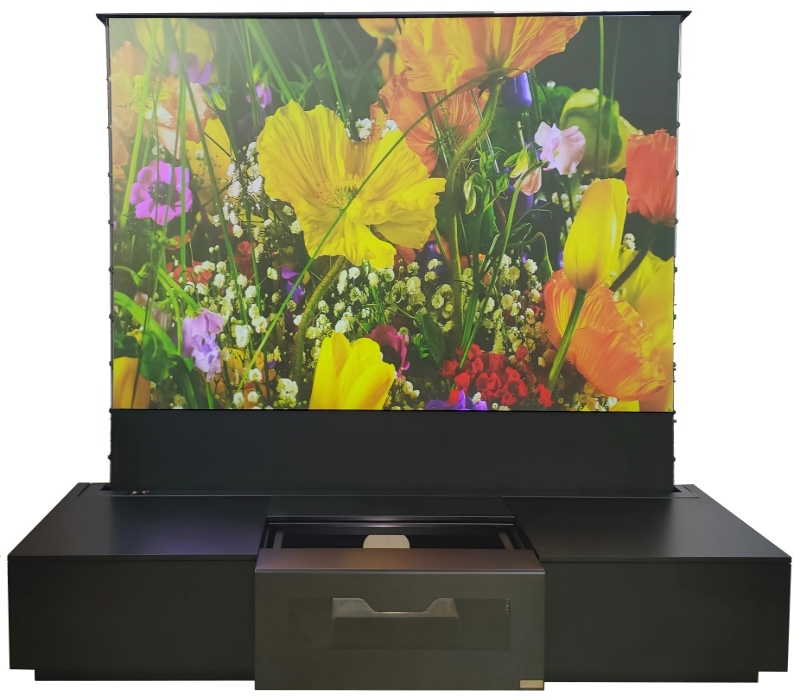
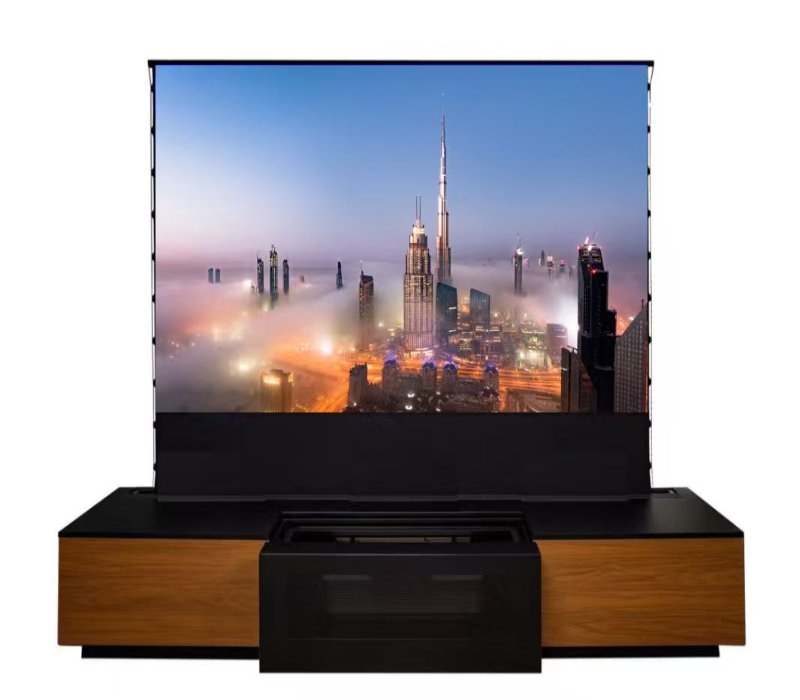
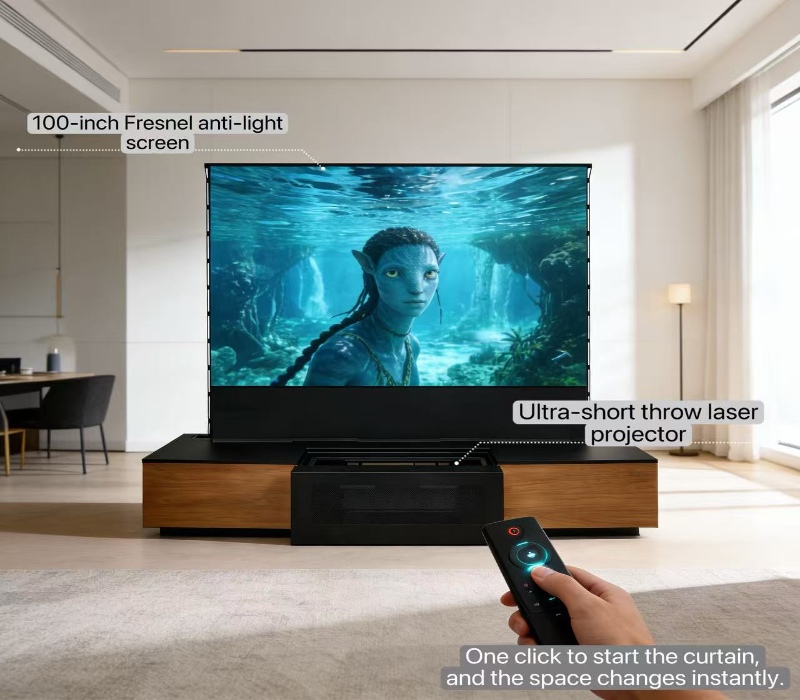
The One-Tap Cinema Smart Cabinet includes a UST laser projector, an electric floor-rising ALR screen, surround sound, and smart controls inside a single unit. The page also shows available sizes of 100 inches and 120 inches. Additional details feature a 1.5 gain, a 120° viewing angle, PET screen material, and a Q195 iron frame. It is also compatible with ultra-short-throw projection. These technical details matter greatly. Shoppers frequently look only at projector brightness. However, the screen gain, viewing angle, and projection match actually determine the stability of the final picture.
Why Is a 100 ALR Cinema Screen Popular for Living Rooms?
A 100 ALR cinema screen provides users with a theater-sized picture. It does this without demanding a massive, dedicated space. For most houses, a 100-inch display feels incredibly immersive. At the same time, it remains manageable for cabinet sizing, seating distance, shipping, and setup. This balance makes the ALR 100-inch projection screen an excellent option. Distributors and project managers frequently choose it for apartments, villas, private clubs, and high-end living room projects.
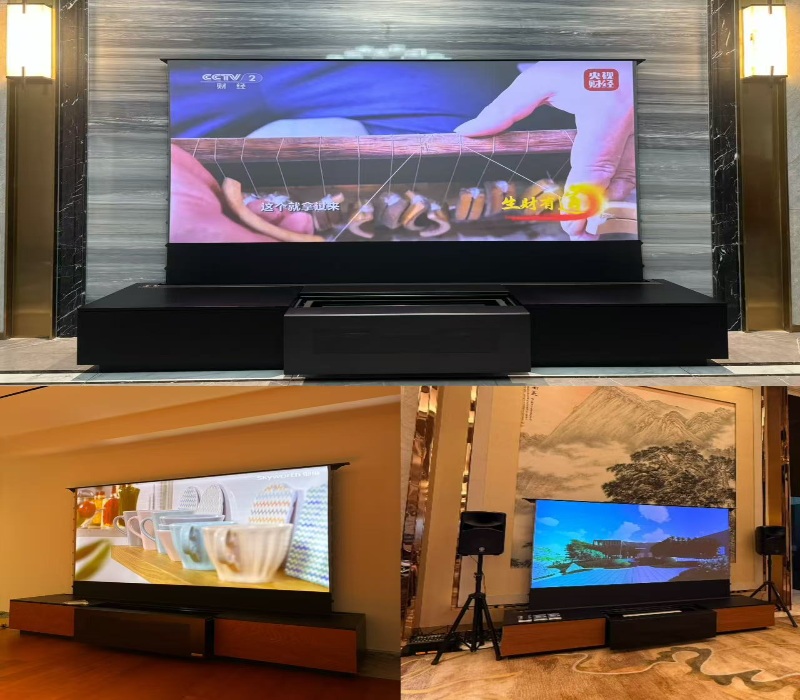
A 100-inch ALR screen also aligns with a major consumer trend found in the best home theater systems. Buyers want fewer visible gadgets and a much cleaner room layout. In the past, people mounted projectors on ceilings and buried cables inside walls. They also hung separate speakers and attached permanent frames to their walls. Now, an integrated cabinet conceals the display when nobody is watching. The area functions as a normal living space first. It simply transforms into a home cinema once the user turns the system on.
How Should Buyers Judge ALR 100 Inch Projection Screen Specs?
Shoppers must begin by checking projector compatibility. Not every ambient light-rejecting screen pairs successfully with every projector model. Certain ALR screens cater specifically to long-throw projection. Meanwhile, Fresnel or CLR-type surfaces are generally built for ultra-short-throw setups. If the material blocks the wrong angle of light, the picture will suffer. It might lose overall brightness or display uneven visual quality.
Buyers must also evaluate gain levels carefully. A higher gain rating can boost image brightness. However, it might restrict the effective viewing zone if the optical design is poorly matched. A 120° viewing angle is highly beneficial for family seating arrangements. This is the exact value listed on the recommended smart cabinet page. People rarely sit in a single, perfectly centered spot. Screen flatness serves as another vital factor. Large projection fabrics easily expose waves, curling edges, and poor tension. These flaws become obvious when watching subtitles, sports scores, gaming menus, or straight architectural lines.
B2B purchasers should assess the product as a piece of furniture as well. Cabinet materials, frame strength, and the motorized lifting mechanism matter greatly. Speaker placement, storage design, packaging quality, and after-sales service also impact the final user experience. A home cinema customer usually notices picture clarity first. In contrast, installation crews care about the setup process. They focus on whether the equipment is simple to position, wire, operate, and repair.
What Makes Integrated Home Cinema Better for B2B Projects?
An integrated home cinema significantly lowers project risks. Based on the supplied company profile, 90% of products are sold overseas, with the United States, Europe, Australia, and Asia listed as primary markets. The supporting manufacturing network includes three separate industrial parks. It features a 130,000-square-meter modern production facility. The company employs over 300 workers and maintains a team of more than 20 engineers. Multiple professional assembly lines ensure consistent product quality and reliable bulk shipments.
This manufacturing scale is crucial. B2B clients are not simply purchasing a single display item. They are investing in a reliable, repeatable solution. A distributor might sell a 100 ALR cinema screen or an ALR 100 inch projection screen. Soon after, end users will ask questions. They will ask about cabinet finishes, lifting speeds, audio placement, and room lighting requirements. They also need advice on projector matching, spare components, warranty claims, and setup guidance. A factory possessing deep AV integration knowledge handles these inquiries easily. They provide much clearer answers than a vendor selling isolated, loose parts.
Conclusion
An ambient light-rejecting screen serves as a highly practical solution. It fixes a genuine home cinema challenge. People want massive displays in rooms that lack perfect darkness. The ALR screen’s full form might sound overly technical to some. However, its actual benefit is incredibly straightforward. It allows consumers to view a bigger, clearer, and far more usable image in standard living areas. Distributors and commercial buyers face a massive opportunity here. The goal is not merely pushing a basic screen. The real value lies in delivering a complete ALR projector screen daytime viewing package. This comprehensive system must blend advanced optical fabrics with UST compatibility. It should also include a sturdy cabinet structure, smart controls, and dependable shipping.
For commercial project inquiries, cabinet customization, and expert screen matching advice, please reach out to Aoxing. You can contact them directly through the One-Tap Cinema Smart Cabinet product page.
FAQ
Is an ALR 100-inch projection screen suitable for a living room?
An ALR 100-inch projection screen fits perfectly in most living rooms. It offers an excellent balance. Users get an immersive picture size alongside a comfortable viewing distance. It also allows for convenient cabinet placement and flexible installation options.
How much does a 100 ALR cinema screen solution cost?
Pricing relies on several different factors. These include physical dimensions, fabric type, and projector compatibility. The cabinet build, audio features, control mechanisms, packing methods, and total order volume also affect the price. For B2B purchases, suppliers should provide quotes based on the complete system setup, rather than just the screen size.
What after-sales support is needed for an ALR projector screen daytime viewing system?
Customers need to verify several support services before buying. They should ask for clear installation instructions and fabric maintenance tips. They also need troubleshooting help for the motorized lifting parts. Furthermore, buyers must ensure spare component availability, secure shipping protection, and professional technical advice. This advice is vital for pairing the display correctly with an ultra short throw projector.
Recent Posts
-
 Floor-Rising Projector Screens for Distributor OEM OrdersOctober 22, 2026
 -
 Projector Screen Materials for Real AV RoomsOctober 14, 2026
 -
 How to Test an ALR Screen Before Bulk OrderingOctober 7, 2026
RELATED PRODUCTS
Your right choice today, our resplendent tomorrow!
REQUEST A PROJECT QUOTE