
How Ambient Light Rejecting Projector Screens Work
-
 作者
- 11 月 12, 2026
A presentation can look crisp with the lights dimmed, then lose its dark detail when the room returns to normal use. For distributors and AV integrators explaining this change, the screen matters as much as the projector setting. Ambient light rejecting technology helps preserve contrast, but its benefit depends on where light arrives and where people sit.
Room light changes the darkest parts of the picture
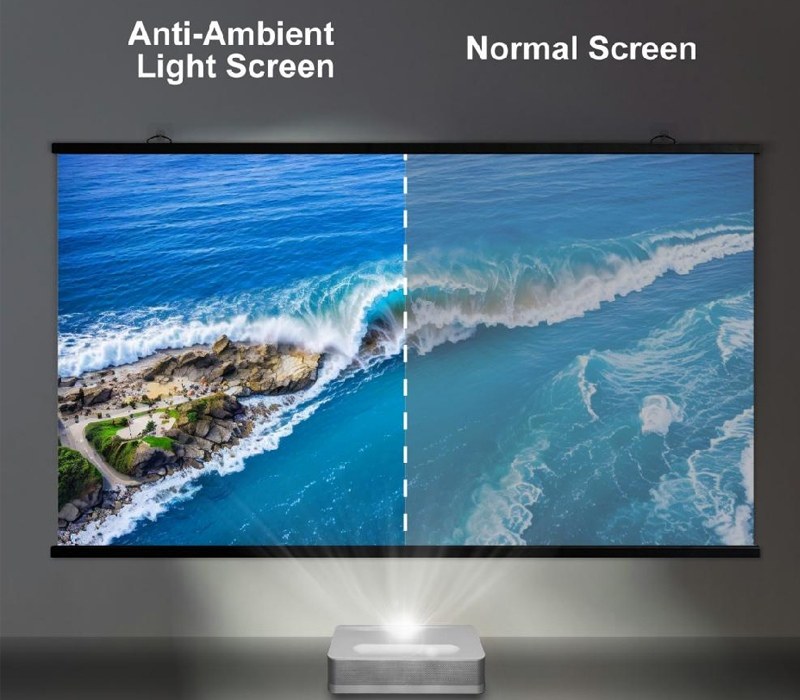
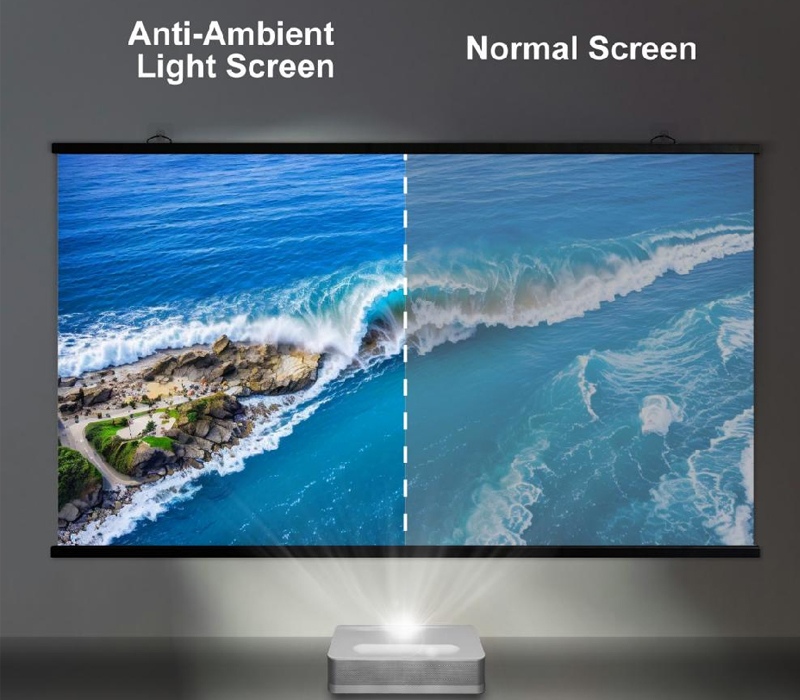
Room lighting adds unwanted brightness to the image. A projector creates a dark area by sending little light there, yet a ceiling lamp can still illuminate that same patch of screen. Blacks then appear gray, and subtle differences between dark shades become harder to see.
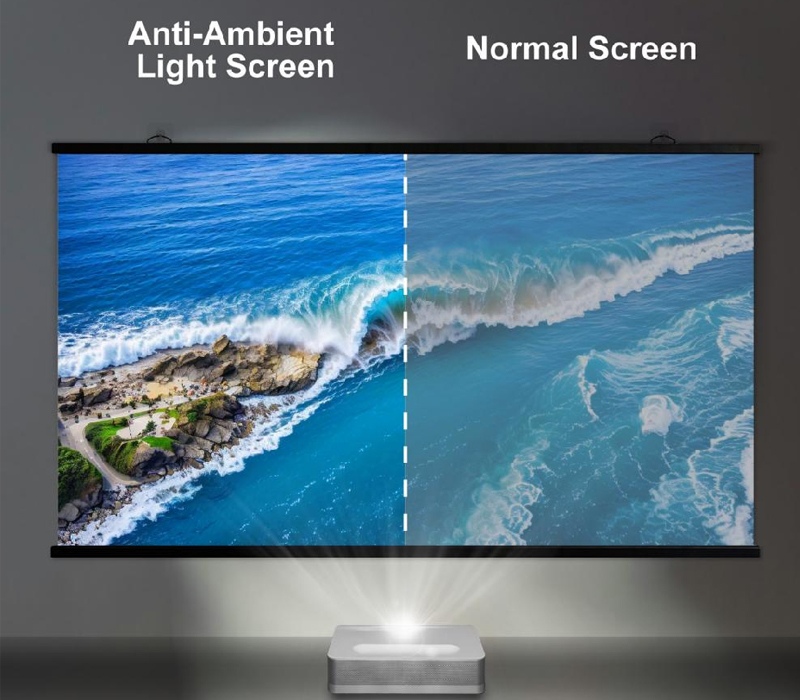
A matte white surface spreads incoming light broadly. That behavior supports wide seating arrangements, but it also scatters unwanted room light toward viewers. An 抗环境光投影幕 uses a more selective optical surface to reduce how much of that unwanted light reaches the viewing area.
The useful improvement is clearer separation between light and dark content. Simply increasing projector output may brighten the highlights while leaving room light on the dark areas. ALR addresses that interference at the screen, so brightness and light rejection serve different jobs.
Directional optics require the right projector geometry
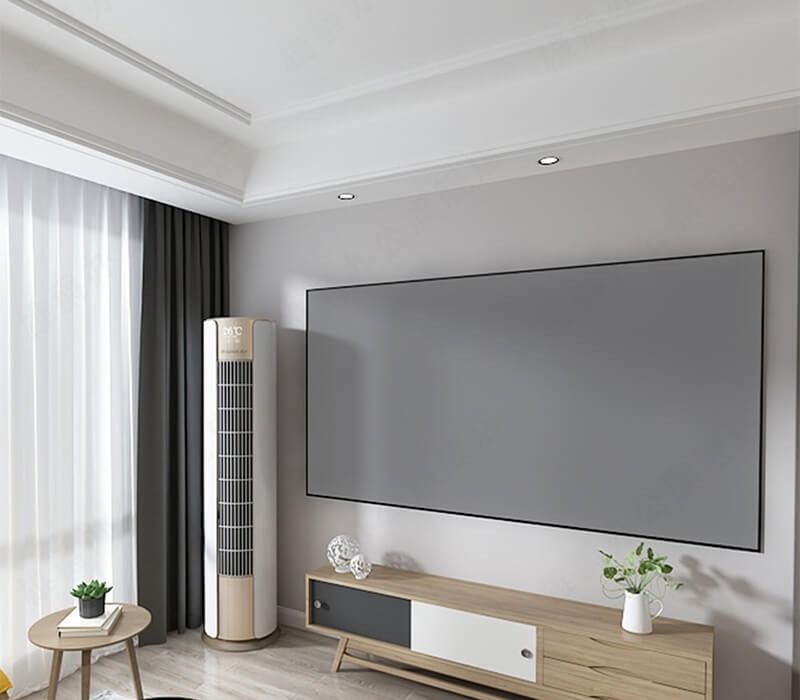
ALR surfaces separate light by its incoming direction. Optical layers, reflective structures and absorbing regions can return useful projection light toward the audience while diverting or absorbing light from other angles. The surface cannot identify a lamp by its source name. Light arriving along the accepted projection path remains difficult to reject.
Ultra short throw projection changes that path substantially. A tabletop UST projector sends light upward from close to the screen, so its screen must accept that steep incoming beam. Conventional long throw ALR materials may reject it. Ceiling light rejection, often called CLR, describes an overhead-light control function; the label alone does not establish projector compatibility.
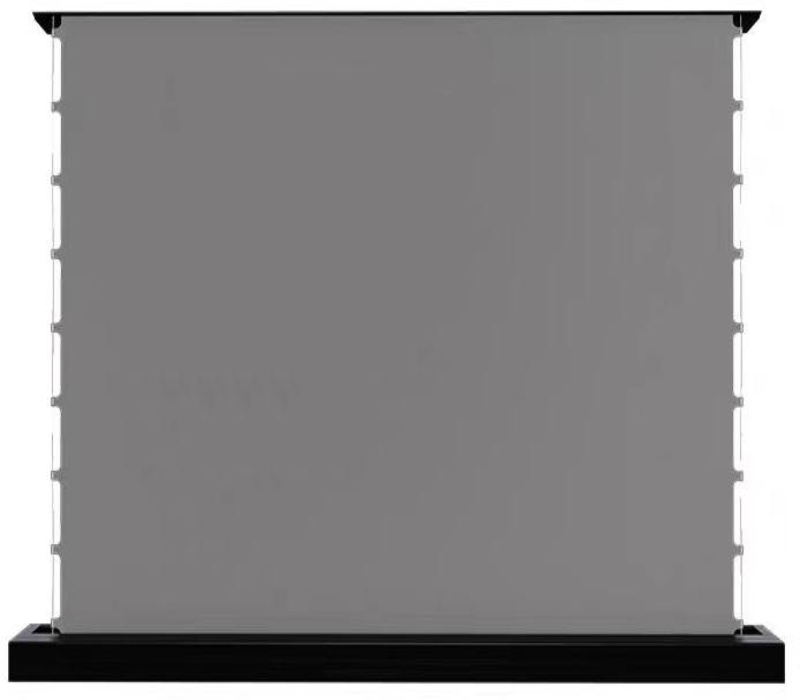
A permanent UST installation therefore needs a surface designed for that geometry. Aoxing offers a fixed-frame ALR screen for UST projector installations, combining PET backing with a PTU and prism surface. The rigid frame holds the surface in tension, while the optical structure manages incoming light. Frame construction and light rejection solve separate parts of the same display problem.
Screen orientation is part of the optical match. Materials designed to accept projection from below must face the specified direction. A dealer demonstration should use the intended projector position and screen orientation before anyone judges whether the material works.

Viewing angle explains why seats can look different
Directional reflection creates a useful viewing zone. Moving toward the side of an ALR screen can change perceived brightness and contrast, even though the projector settings stay constant. This matters in a wide meeting room where the central seats and the outer chairs need a similarly readable picture.
Gain describes relative brightness in a defined viewing direction. A higher peak gain does not automatically mean better performance across every seat or stronger rejection of every light source. Viewing-angle information needs its definition too: a half-gain angle marks where brightness falls to half the peak, rather than a hard boundary beyond which nothing is visible.
A diffuse surface provides a useful reference for that tradeoff. Aoxing’s white-matte Manual Tabletop Screen has a specified viewing angle above 160 degrees. That figure belongs to that model, not to its ALR range. Wide diffuse viewing and directional light control are different priorities, so their angle figures should not be treated as interchangeable.
Screen format determines where the optical surface can work
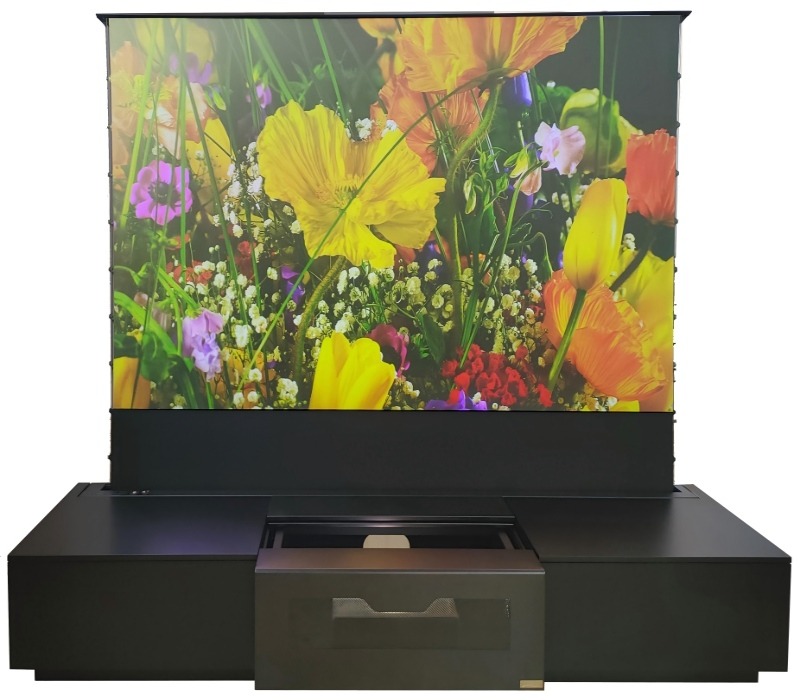
The room’s use determines how the matched surface should be supported. An ALR designation describes light management; it does not say whether the screen remains on a wall, rises from a case or moves between rooms. The following formats illustrate different ways to place the surface in an Aoxing installation.
|
Screen format |
Supported configuration |
Practical implication |
|---|---|---|
|
Fixed frame |
Surface tensioned on a rigid frame |
Suits a dedicated display position. |
|
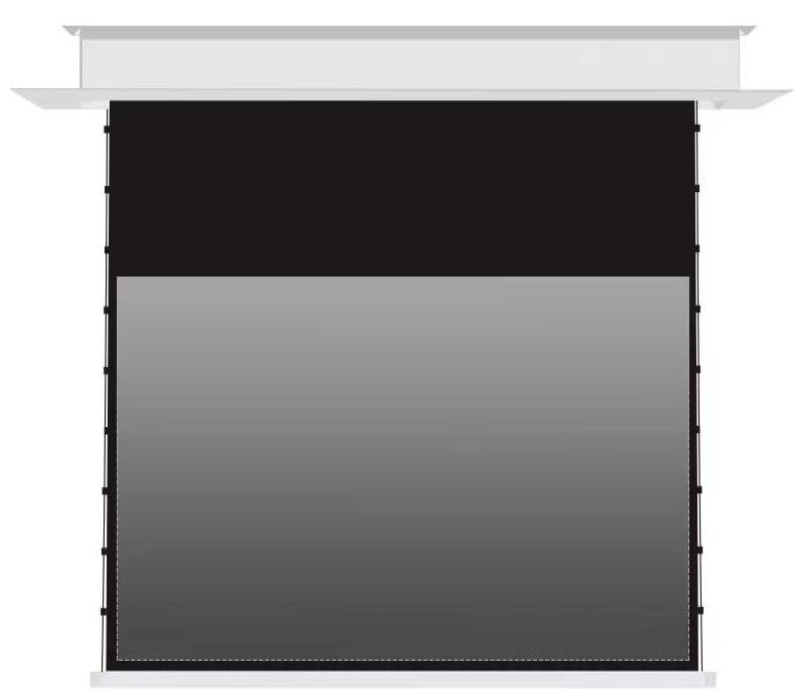
Electric floor-rising |
Fresnel ALR or PVC white/gray material options |
Avoids wall mounting; specify the ALR option when needed. |
|
Smart furniture |
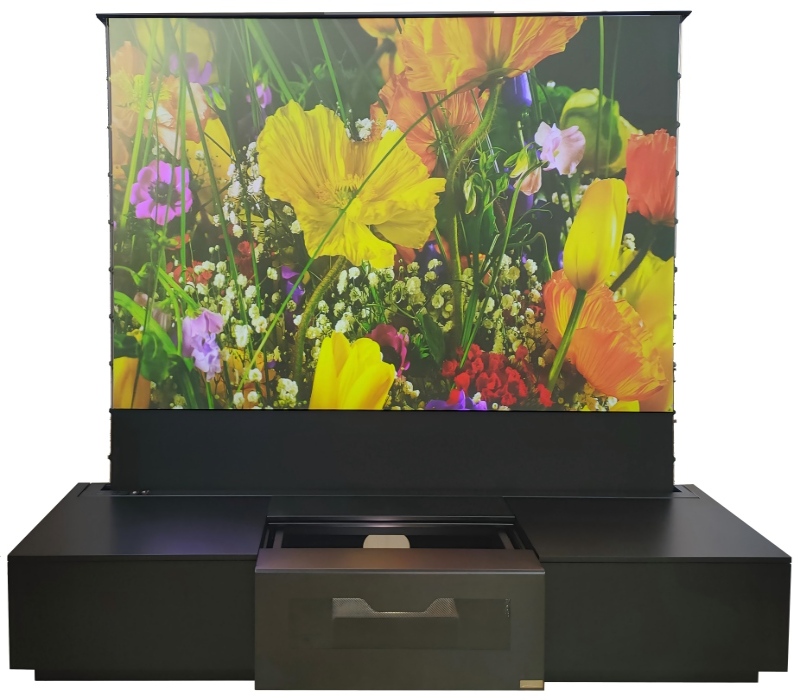
UST projection, electric rising screen, audio and smart control; Fresnel ALR material |
Integrates the display into furniture used between viewing sessions. |
A temporary demonstration has different placement demands. A portable ALR screen can bring the optical surface into a presentation space without committing to a permanent display position. Moving it also changes the relationship between windows, lamps, projector and audience. The previous room’s result therefore needs checking again in the new space.
A meaningful demonstration uses the lighting that people actually need. Show dark content and presentation text, then inspect both central and outer seats. Turn nearby lamps on individually to locate interference. This simple comparison helps separate an optical mismatch from a lighting problem without promising a universal daylight result.
ALR works best as part of the room
A suitable projector screen for ambient light preserves useful contrast when its optical direction, projector position and seating area agree. It still benefits from blinds or lighting adjustments where strong illumination strikes the surface. For trade demonstrations, the clearest explanation connects the improvement to those visible room conditions and the exact screen configuration.
常见问题解答
What does ALR mean on a projector screen?
ALR means ambient light rejecting. The surface uses directional optical behavior and, depending on its construction, absorption to reduce unwanted light reaching viewers. It does not remove light from the room.
Can an ALR screen work in daylight?
It can improve a daytime image when incoming room light falls outside the surface’s accepted projection direction. Strong sunlight on the screen can still overwhelm the result, so window shading remains useful.
Does every ALR screen work with a UST projector?
No. UST projection needs a compatible surface that accepts its steep incoming light. Confirm the exact material and intended mounting orientation rather than relying on the ALR label alone.
Is CLR the same as ALR?
CLR focuses on ceiling light rejection within the broader problem of ambient light control. Products using these labels can have different optical structures, side-light behavior and projector requirements.
Is a higher-gain ALR screen always better?
No. Peak brightness is only one consideration. The viewing zone, room-light direction and projector compatibility determine whether that brightness remains useful for the people seated around the room.
近期文章
-
 ALR Screen Gain and Viewing Angle: What Matters Most11 月 5, 2026
-
 Installing a UST ALR Screen the Right Way Up10 月 29, 2026
-
相关产品
您今天的正确选择,我们辉煌的明天!
REQUEST A PROJECT QUOTE