

ALR Screen Gain and Viewing Angle: What Matters Most
-
 作者
- 11 月 5, 2026
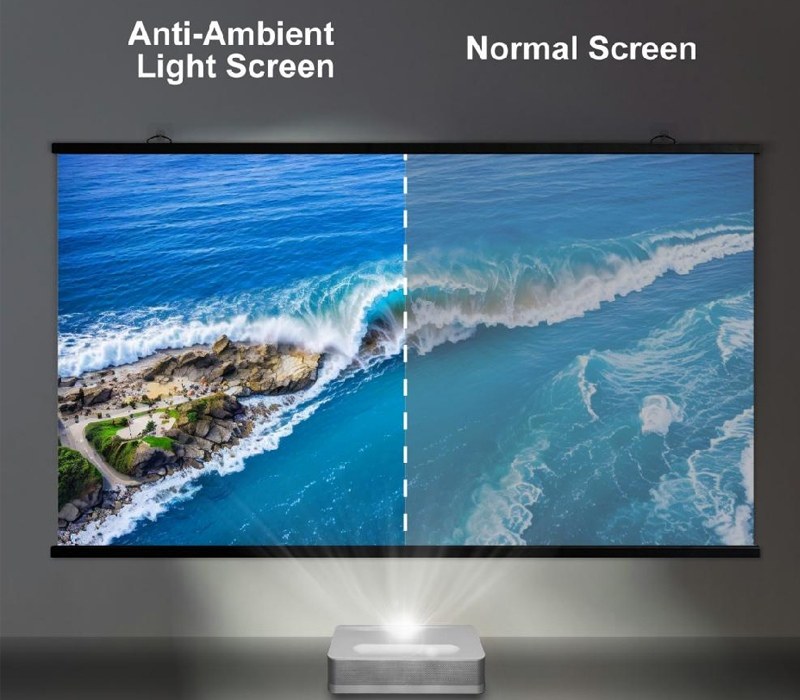
An ALR screen can make a bright room more usable, but the clearest-looking specification is not always the best choice for the people in it. For distributors and AV teams, the useful question is not simply how much brightness a surface can return. It is whether that brightness reaches the projector’s intended seats while the room’s stray light stays out of the image.
Brightness Has a Direction, Not a Universal Score
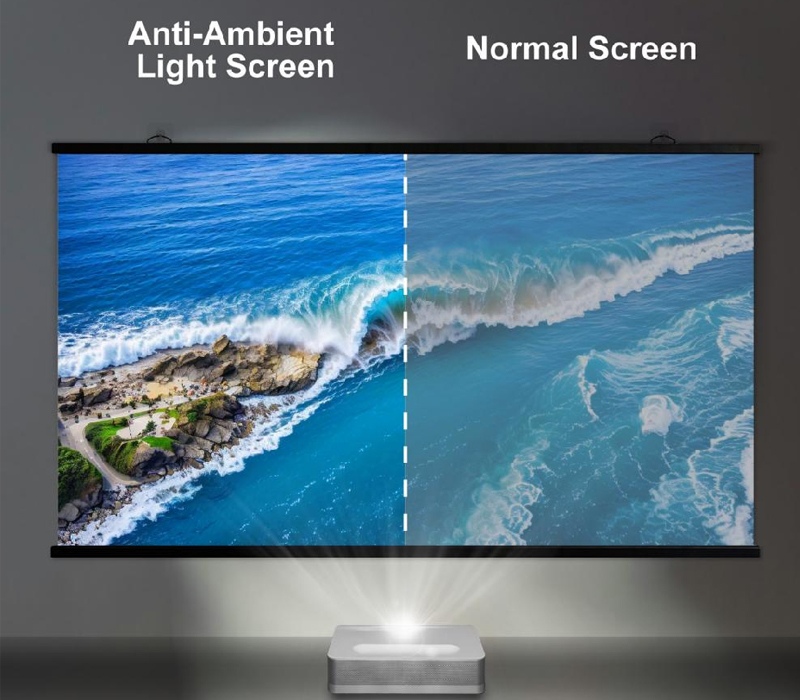
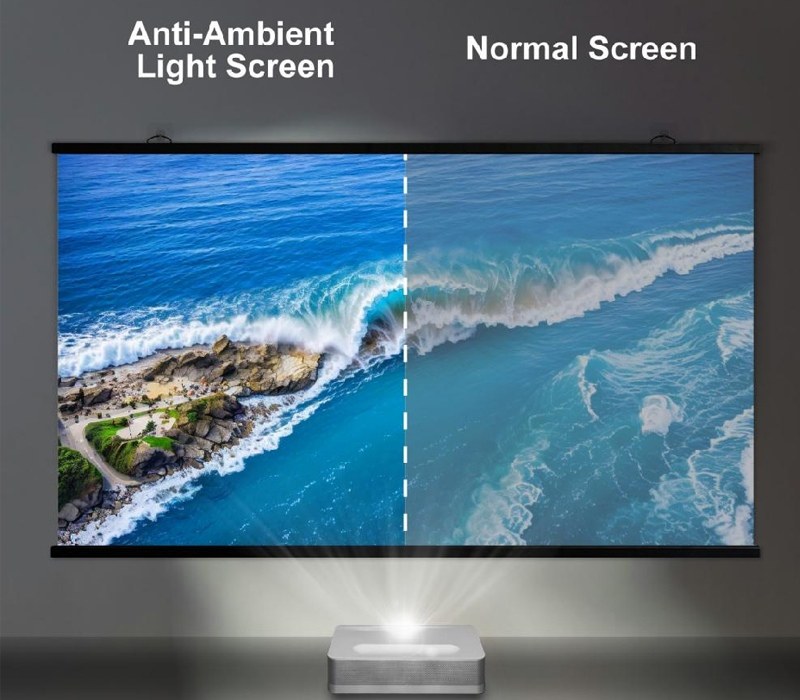
Gain describes how strongly a screen returns projected light toward the viewing position. With an 抗环境光投影幕, that return is deliberately directional: the optical surface is designed to favor the projector’s light path and reduce light arriving from less useful directions. A larger number can therefore produce a livelier center image without making every seat equally bright.
That is why an ALR screen gain figure needs context. Gain supports image brightness, but it also changes how narrowly the surface concentrates light. A very high figure may suit a small, centered viewing zone; a lower, more forgiving figure may serve a wider seating plan better. The specification becomes meaningful only when it is read alongside the room layout.
The Viewing Cone Is the Real Audience Test
Viewing angle describes how far viewers can move away from the center before the image loses a noticeable share of its brightness or consistency. In practical terms, it is the difference between a screen that looks strong from the sofa in front and one that remains convincing for people seated at the ends of a meeting table.
A centered seat and a shared room are different jobs
A compact media room with one main seating row can accept a more directional surface because most eyes remain close to the ideal axis. A training room, open lounge, or client briefing area usually needs a more generous cone. Asking where real people sit is more useful than chasing the highest gain listed on a data sheet.
How to read the specification without overreading it
The half-gain angle is particularly helpful because it marks the point where brightness has fallen to half the center level. It should be compared with the width of the intended audience zone, not treated as a badge of quality. A surface can be excellent for a focused viewing position and still be the wrong fit for wide, off-axis seating.
|
房间图案 |
Priority to test |
Likely trade-off |
|---|---|---|
|
One centered viewing row |
Peak on-axis brightness |
A narrower cone may be acceptable |
|
Wide sofa or several seats |
Off-axis brightness consistency |
Moderate gain can be more useful |
|
Meeting or presentation room |
Side-seat readability |
Avoid judging only from center seat |
The Projector’s Light Path Sets the Boundary
Optical direction matters before gain is even discussed. A UST ALR projector screen is built around light arriving steeply from below, while a screen designed for a standard projector expects a different path. If the optical structure and projector geometry disagree, a promising gain number cannot recover the lost contrast or uneven brightness.
The same principle applies to room lighting. Overhead lamps, side windows, and light-colored walls do not affect every screen in the same way. An ALR surface helps when its structure rejects the dominant unwanted light direction, but it cannot turn uncontrolled direct sunlight or a badly aimed projector into a balanced image.
Projector type and mounting position determine the useful optical direction.
The main seats determine how much off-axis loss is acceptable.
The strongest ambient-light source determines what the screen should reject.
Room Use Changes the Right Trade-off
A high gain ALR screen can be attractive where a bright center image is the main objective, such as a compact demonstration area with a controlled seating position. Its value falls when the audience naturally spreads outward. In that situation, a screen with a broader usable viewing cone can deliver a more dependable shared experience even if its center brightness looks less dramatic.
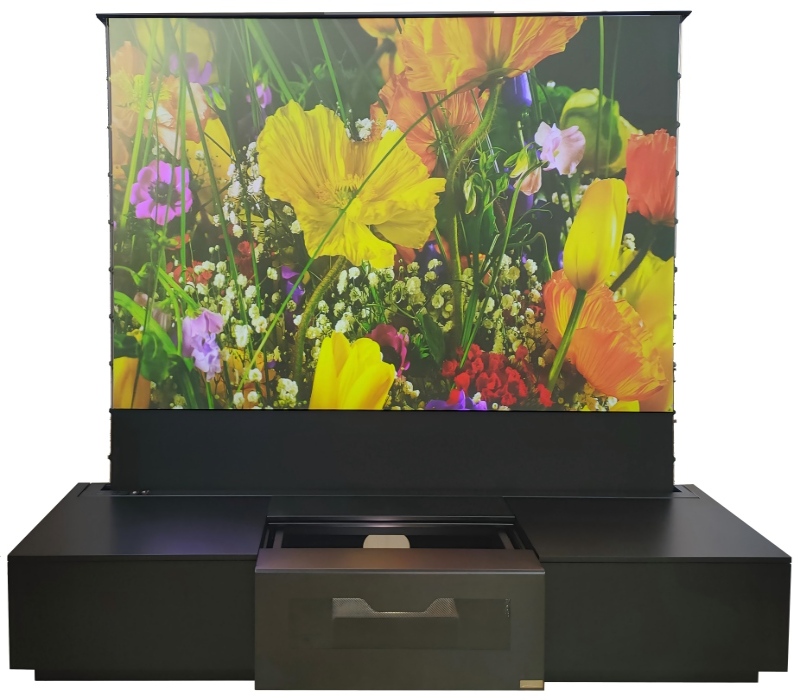
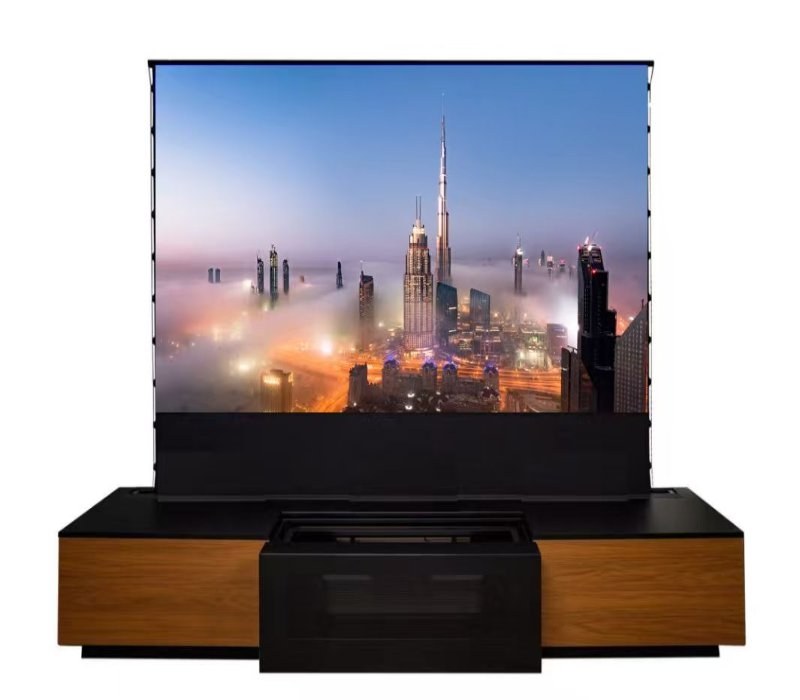
Format should support the same decision, not distract from it. A fixed-frame screen keeps the surface under continuous tension for a stable picture plane, while a floor-rising design can solve a finished-room installation where wall mounting is impractical. These are layout choices; neither replaces matching the optical surface to the projector and the audience.
Compare Samples Under the Same Conditions
The most reliable comparison puts candidate screens in the intended projection geometry and tests more than the center seat. View a bright scene and a dark scene, then move across the expected seating positions with normal room lighting on. Look for brightness falloff, color change, sparkle, and whether contrast holds where people will actually watch.
For projects that need a relevant product discussion after that test, Aoxing offers anti-light, fixed-frame, floor-rising, and Fresnel screen options across different deployment needs. The useful next step is to share the projector type, room-light pattern, screen size, and seating layout so the material discussion stays tied to the real visual task.
The Practical Takeaway
Gain and viewing angle are a paired decision. Prioritize gain when the main viewers sit near the intended axis and controlled brightness is the key problem. Prioritize a wider viewing cone when the image must work for a broader audience. In every case, confirm the projector’s light path first, then judge samples from the seats that matter rather than from the best possible center position.
常见问题解答
Does higher gain always mean a better ALR image?
No. Higher gain can make the center image brighter, but it can also make brightness fall away more quickly off-axis. The better choice depends on the seating pattern and projector geometry.
What is a good viewing angle for an ALR screen?
There is no universal figure. The useful angle is one that keeps the intended seats inside the screen’s acceptable brightness range. A single sofa and a wide meeting room should be evaluated differently.
Can a standard projector use a UST ALR screen?
Usually it should not. A UST optical surface is designed for light rising steeply from below, while a standard projector sends light from another direction. The wrong match can reduce image quality.
Why can side seats look dimmer on a high-gain screen?
High-gain surfaces concentrate more reflected light toward the central viewing axis. As viewers move farther away from that axis, they may receive less of the reflected light and see a dimmer image.
Should distributors request a screen sample before placing a bulk order?
Yes, when the project has demanding ambient light, UST geometry, or wide seating. A sample check in comparable conditions helps align the selected surface with the installation rather than relying on one number alone.
近期文章
-
 Installing a UST ALR Screen the Right Way Up10 月 29, 2026
-
-
 Projector Screen Materials for Real AV Rooms10 月 14, 2026
相关产品
您今天的正确选择,我们辉煌的明天!
REQUEST A PROJECT QUOTE