

How to Match a Screen to an Ultra Short Throw Projector
-
 auteur
 - septembre 24, 2026
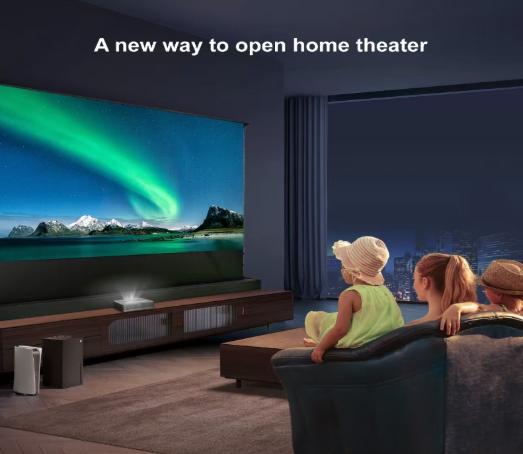
An ultra-short-throw projector can make a large image practical in a room where a ceiling-mounted projector would feel intrusive. Its steep, close-range light path also makes the screen a critical part of the picture: the wrong surface can soften contrast, narrow the useful seating area, or make a carefully placed projector look misaligned.
Why UST projection changes the screen decision
A UST projector sends light upward from a cabinet or low console at a much steeper angle than a conventional projector. That geometry is why a flat, compatible surface matters more here; small waves, a tilted frame, or an optical layer designed for another throw direction can become visible across the image.
The projector’s throw ratio comes first
The projector manual should set the first boundary. A compatible UST screen has to suit the model’s throw ratio, image size range, and recommended screen position. Screen size should therefore follow the projector’s verified image geometry and the available wall or furniture line, rather than a diagonal-size preference alone.
The optical direction matters just as much as the size. A surface engineered to receive UST light from below is not a general-purpose substitute for a long-throw ALR surface, and installing a directional material upside down can redirect useful light away from the seats. Checking the orientation mark before final mounting prevents a surprisingly common setup error.
Light at the screen wall sets the material priority
Room light determines whether a neutral surface is enough or directional light control earns its cost. A dim media room may prioritize color and a broad viewing cone, while a living room with ceiling fixtures, side windows, or daytime use needs the screen to manage competing light without promising to defeat direct sun.
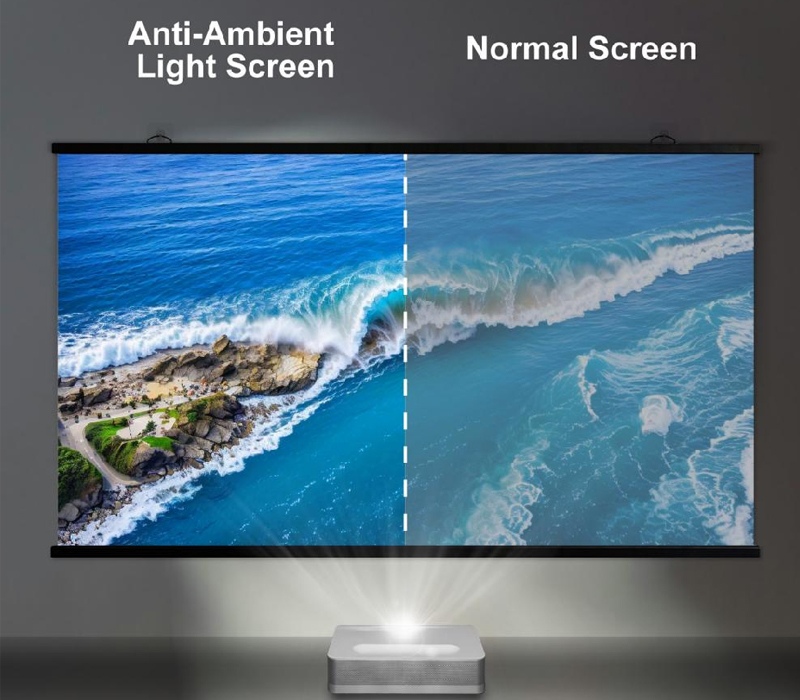
An ambient light rejecting projector screen can preserve perceived contrast when unwanted light arrives from directions its optical structure is designed to reject. It cannot create a dark-room result when sunlight lands directly on the viewing surface, so observe the wall at the hours people actually watch before treating an ALR label as the whole answer.
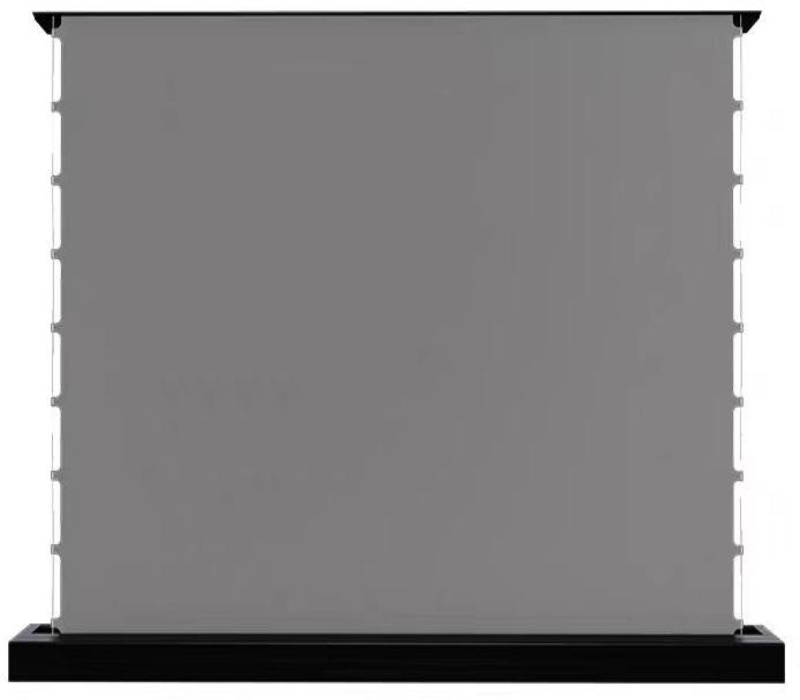
Surface direction and viewing positions need the same answer
Fresnel and lenticular surfaces solve different light paths
Directional optical surfaces work by favoring projector light while steering some room light elsewhere. For a UST setup, an alr screen for ultra short throw projector use should be matched to the projector’s low, upward light path and the room’s dominant light source. That fit is more meaningful than a broad claim about gain or daytime viewing.
Viewing positions deserve a real-room check, not a center-seat assumption. A more aggressive optical design can deliver a strong image straight ahead yet change brightness or contrast toward the side seats. For shared spaces, inspect the image from the widest seats that will normally be used, especially when the screen is large or the sofa is spread across the room.
A practical evaluation is short and repeatable:
Place the actual projector at its intended height and distance.
View a bright scene and a dark scene with normal room lighting on.
Check the center and edge seats for evenness, color, and reflected glare.
Confirm the screen’s top-to-bottom orientation before permanent installation.
The mounting format should fit the room’s daily rhythm
A fixed frame is often the simplest route when the screen wall is dedicated to projection, because constant tension supports the flatness a UST image reveals. A fixed frame ALR screen is especially useful where the picture can remain on display and the viewing distance or room layout will not change day to day.
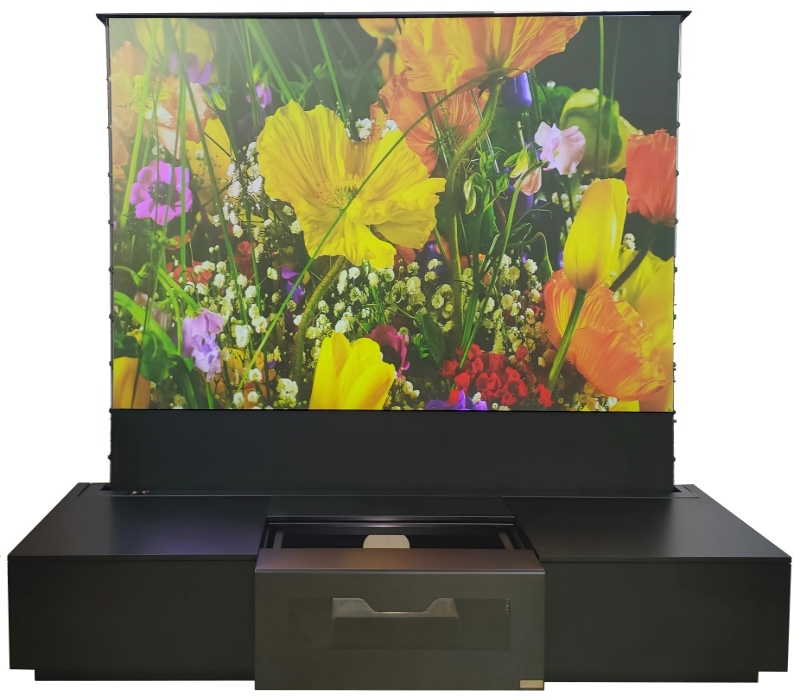
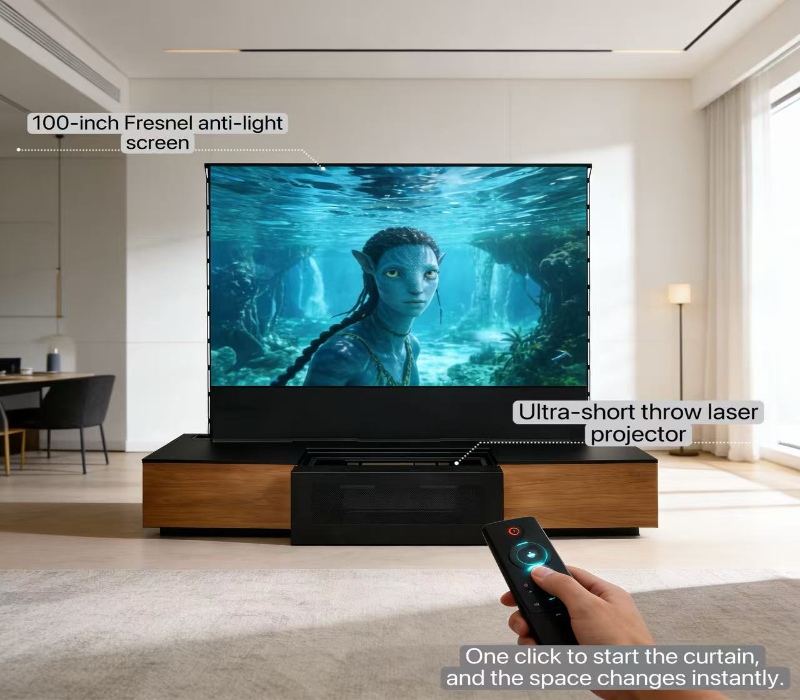
A floor-rising design serves a different room pattern. It can keep a wall visually open when the screen is stored, but its cabinet position, projector alignment, and rising mechanism need to be treated as one visual system. Aoxing’s floor-rising and smart-furniture options pair UST-compatible Fresnel ALR material with formats intended for rooms where the screen should disappear between viewing sessions.
For a compact living-room installation, a screen for ultra short throw projector use can be part of an integrated cabinet rather than a separate wall-mounted element. The important point is to confirm the complete geometry of projector, rising screen, and seating before the furniture location becomes permanent.
A practical UST screen match
The best UST setup begins with the projector’s light path, then tests the room’s light and seating, and only then settles on material and mounting format. A compatible surface, correct orientation, and a flat image plane matter more than a generic promise of high gain or daylight performance.
Where ambient light is a regular part of the room, an écran de projection rejetant la lumière ambiante should be assessed as part of the whole layout. If the room needs a retractable visual solution, an alr screen for ultra short throw projector applications can be evaluated alongside a fixed frame rather than treated as a separate picture-quality category.
FAQ (questions fréquentes)
Can a regular white screen work with a UST projector?
Yes, a regular white screen can work in a well-controlled room if it is flat and sized correctly. A purpose-built UST surface becomes more valuable when room light is harder to control or the picture must stay consistent during daytime viewing.
Does every UST projector need an ALR screen?
No. The need depends on room light, viewing habits, and the picture standard the space requires. An ALR option is most useful when ceiling or side light would otherwise wash out contrast during normal use.
Why can a UST image look uneven on a screen?
Unevenness can come from a screen that is not flat, a mismatch between the optical surface and the projector angle, incorrect orientation, or a projector that is not level. Check physical alignment before assuming the projector itself is at fault.
Is a floor-rising UST projector screen harder to align?
It needs deliberate placement because the projector and rising screen share the cabinet zone. Once the cabinet position and screen travel are established, the format can be a practical solution for a finished room that cannot take a permanent wall-mounted screen.
What should distributors confirm before selecting a UST screen?
Confirm the intended projector throw ratio, screen size, room-light pattern, normal seating span, and installation format. Those five points reveal whether the project needs a fixed frame, a floor-rising format, or another compatible solution before surface claims are compared.
Posts récents
-
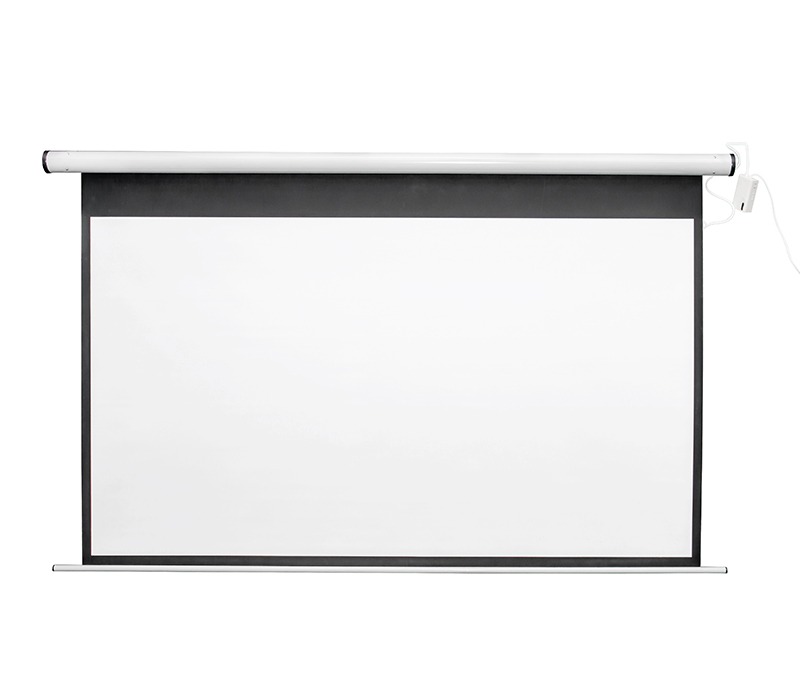 Retractable Projector Screens for Multipurpose Roomsseptembre 17, 2026
 -
 Fresnel ALR vs Lenticular CLR for UST Projectorsseptembre 10, 2026
 -
 Featured at InfoComm: 2026 See AOXING’s Fresnel ALR Screen in Actionseptembre 3, 2026
PRODUITS LIÉS
Votre bon choix aujourd'hui, notre brillant demain!
REQUEST A PROJECT QUOTE