

Fresnel ALR vs Lenticular CLR for UST Projectors
-
 auteur
 - septembre 10, 2026
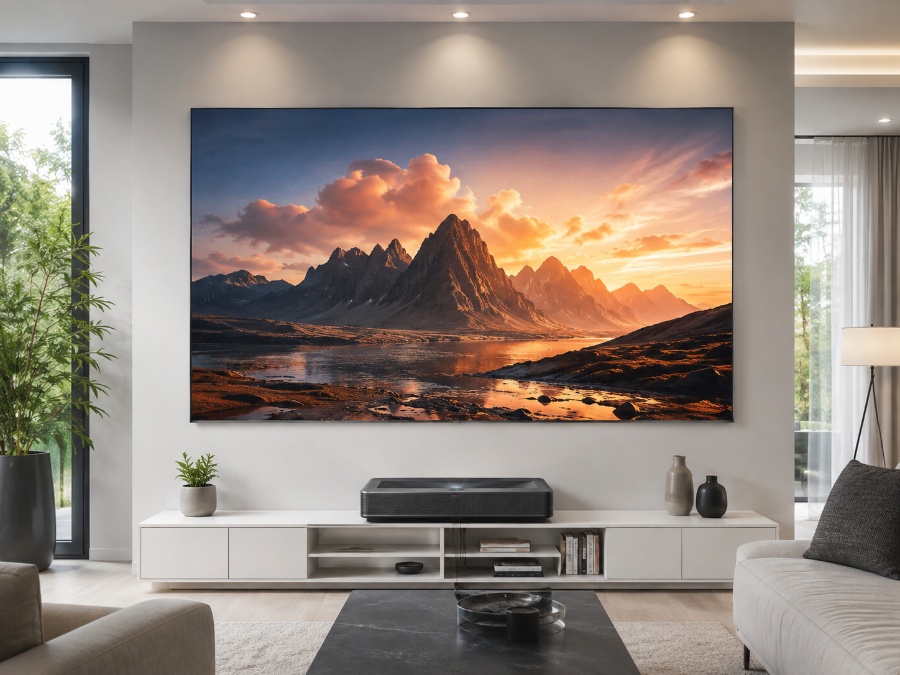
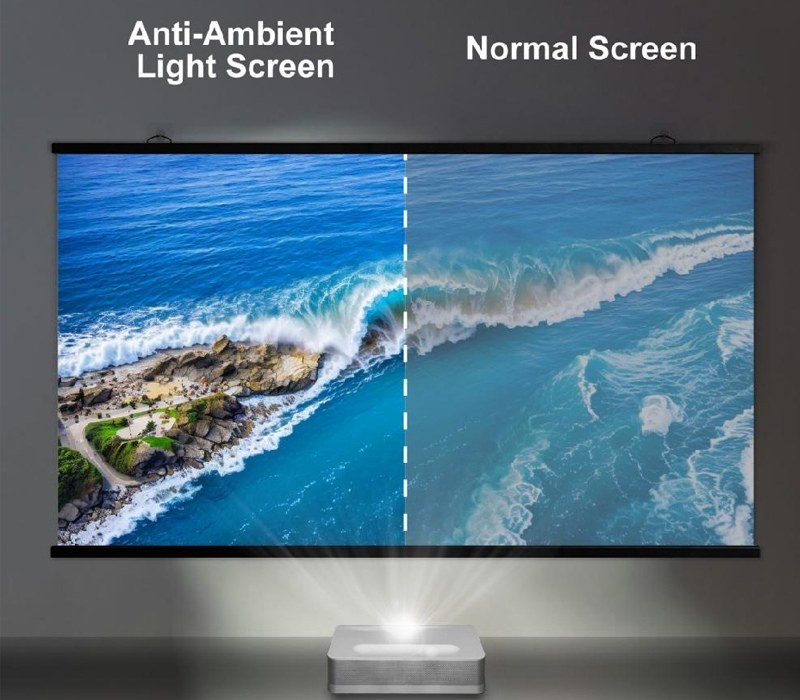
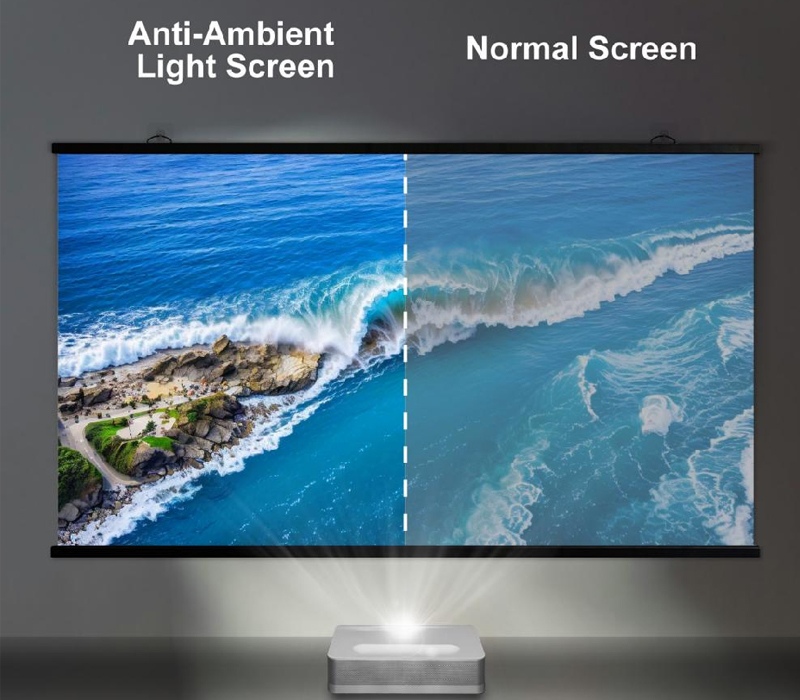
A UST projector can look surprisingly different after the screen changes. For distributors and AV integrators, the useful question is not whether an ALR surface is generally better, but whether Fresnel or lenticular optics suit the light arriving in one real installation. That choice shapes daytime contrast, the usable seating area, and the screen format worth proposing.
The UST light path makes screen structure decisive
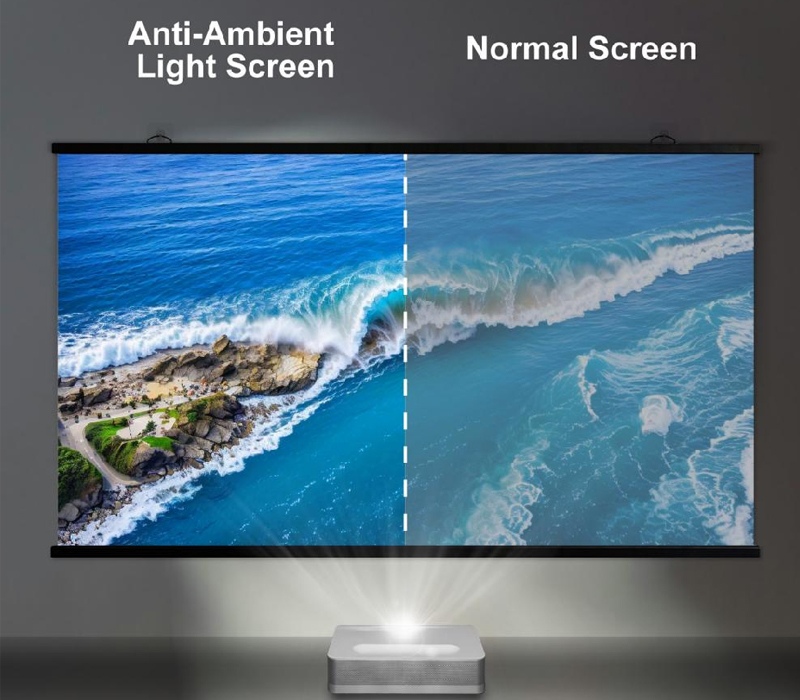
A UST projector throws light upward from a very short distance, so its beam reaches the screen at a steep angle. A plain white surface reflects that light broadly, while a directional UST surface is designed to favor the projector path and reduce light arriving from less useful directions. This is why an écran de projection rejetant la lumière ambiante needs to match projector placement rather than merely carry an ALR label.
The same geometry makes surface flatness easy to notice. Small ripples can create uneven bands or shadowing because the image arrives from below, not from across the room. Before comparing gain or price, confirm the intended projector height, the screen orientation marks, and whether the finished room has ceiling, side-window, or mixed ambient light.
- Projector position: a low UST placement and a ceiling-mounted layout do not share the same optical direction.
- Dominant light source: overhead fixtures, side windows, and open-plan reflections create different problems.
- Seating pattern: one central viewing zone and a wide sofa row should not be treated as the same requirement.
Fresnel ALR and lenticular CLR solve different problems
Fresnel focuses the best image toward the planned seats
A Fresnel surface uses concentric optical ridges to return light from the planned UST position toward the viewing area. In a room with substantial ambient light, that concentration can preserve perceived contrast. A Fresnel-style alr projector screen is often strongest when the key seats are centered and projector, screen, and seating can stay in a stable relationship.
That focus is also its trade-off. Fresnel designs can have a narrower best-viewing cone, so the outer seats deserve a real check instead of an assumption. The surface is direction-sensitive too: rotating it or pairing it with a projector in an unintended position can send useful light away from viewers.
Lenticular CLR fits the usual upward UST geometry
A lenticular CLR screen uses a fine, sawtooth-like profile that favors light arriving from below and reduces light from above. It is commonly a practical fit where ceiling light is the dominant nuisance and a broader sofa or meeting-table audience matters. A lenticular clr screen should still be checked against the projector’s throw range and the screen maker’s orientation guidance.
The market terms overlap, so a trade buyer should compare the optical construction and stated installation geometry rather than treat CLR and ALR as fixed performance grades. In spaces with strong side daylight, lenticular performance may need help from blinds, lighting control, or room layout more than a centrally focused Fresnel surface does.
| Decision factor | Fresnel ALR | Lenticular CLR |
| Light problem | Mixed ambient light, including challenging side light | Ceiling light and reflected overhead light |
| Viewing pattern | Best where central seats matter most | Often suits a wider shared viewing area |
| Installation sensitivity | High: position and direction are critical | High: UST direction remains critical |
| Format implication | Usually needs a carefully supported flat surface | Available in several fixed or rising UST formats |
Room light and seat layout should settle the choice
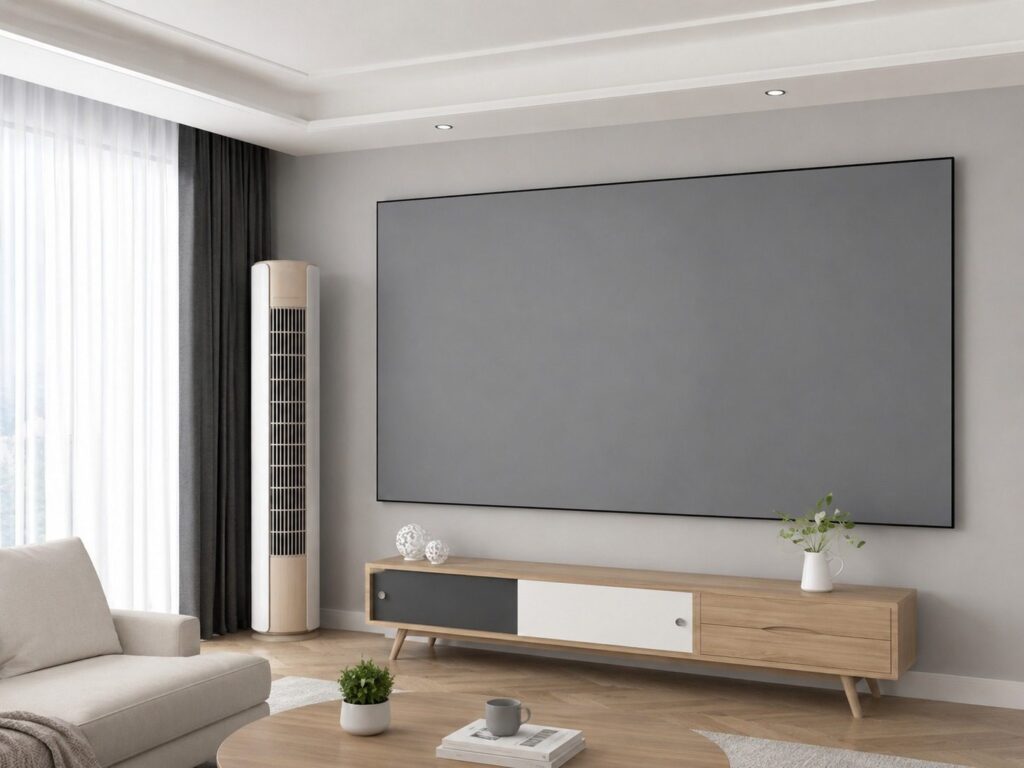
A bright front-facing living room calls for a different answer from a dim media room with a wide sectional. When daylight or lamps reach the screen from several directions, Fresnel may justify its tighter viewing discipline. When the main issue is ceiling light and viewers spread across a wider row, a lenticular CLR surface may create the more even experience.
The conversation becomes clearer when the reseller asks for a simple room sketch before recommending a screen. Mark the projector location, primary seating, windows, lamps, ceiling downlights, and whether curtains will normally be open. This turns a vague request for the best screen into a decision about the light paths that will reach it.
- Use a central-seat test image and then check the two farthest likely seats.
- Test with the room’s normal lighting, not only a dark-room demonstration.
- Confirm the projector model’s supported image size before promising a 100-inch or 120-inch system.
Screen format matters after the optics are clear
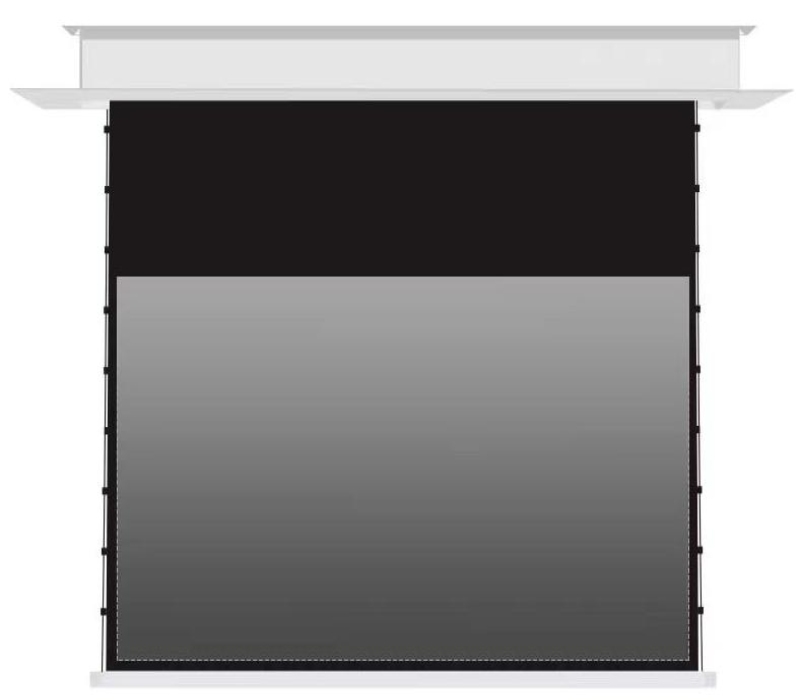
Optics and mechanics should be considered together, because a suitable surface must remain stable in its finished format. A fixed frame keeps the screen plane taut for a UST image. A carefully designed floor-rising system can answer a furnished-room constraint, but its material, tension control, and rise position still have to support the same projection geometry.
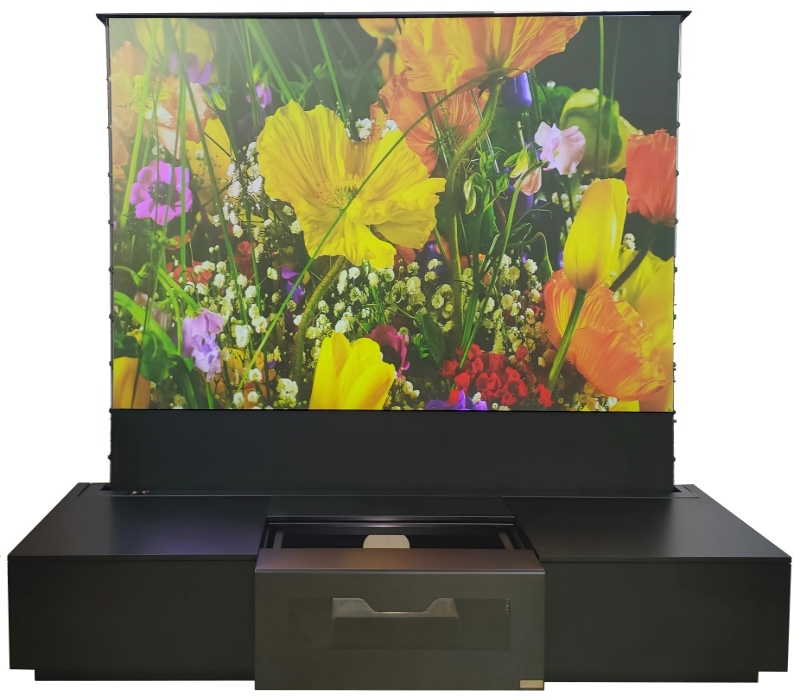
That distinction matters when a room needs the display to disappear between viewings. Aoxing smart furniture can integrate an ultra-short-throw laser projector, an electric floor-rising screen, sound, and control in one cabinet. The furniture decision becomes relevant after the room’s light pattern and preferred screen technology are clear; it cannot replace optical matching.
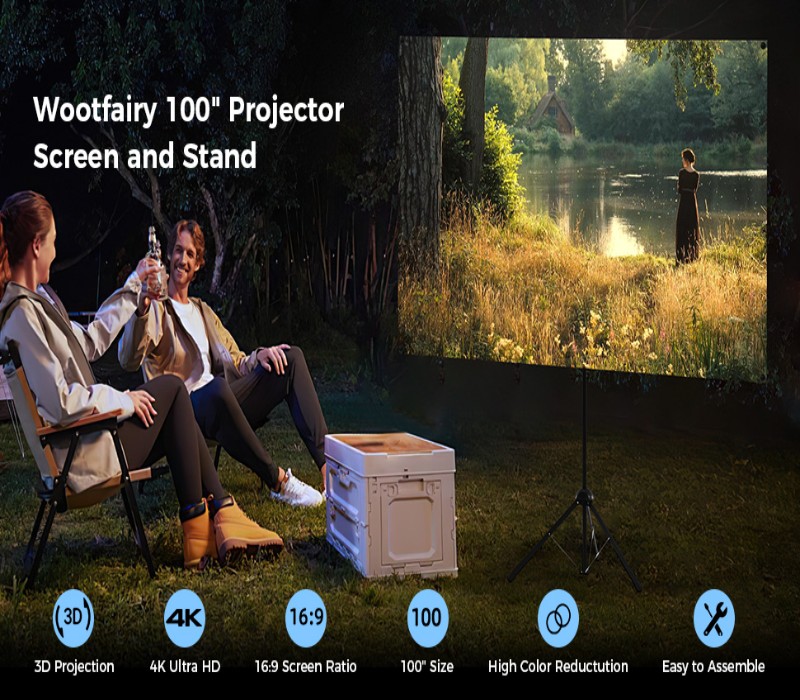
Portability can be useful for demonstrations, temporary installations, or rooms where permanent wall work is unsuitable. Yet an alr screen for ust projector still needs a flat, correctly oriented surface and a repeatable projector position to deliver its intended contrast. A portable format changes deployment, not the underlying optical rules.
The practical takeaway
Fresnel and lenticular surfaces solve different versions of the UST problem: directing projector light toward viewers while limiting light that washes the image out. Fresnel is compelling when strong ambient light and central viewing dominate. Lenticular is often the steadier choice when overhead light and a wider audience shape the brief. A projector screen for ambient light works best when light source, seating, surface orientation, and projector position are evaluated as one system.
FAQ (questions fréquentes)
Is a Fresnel screen always better for a bright room?
No. Fresnel can be very effective against challenging ambient light, but its preferred viewing area and installation precision must suit the room. A wide seating layout or primarily overhead light may favor another UST optical structure.
Can a lenticular CLR screen work with any UST projector?
It should be matched to the projector’s supported image size and intended placement. Check the screen orientation guidance and test the planned projector position before committing to an installation.
Why does an ALR screen look wrong when installed upside down?
Directional ridges are designed to accept light from a particular angle. Reversing the surface can reject or redirect the projector beam, which can reduce brightness and produce an uneven-looking image.
Does a UST screen remove the need for curtains or lighting control?
No screen eliminates every reflection. Directional surfaces can improve contrast, but controlling the strongest window or ceiling light still gives the installer more reliable results.
Posts récents
-
 Floor-Rising Projector Screens for Distributor OEM Ordersoctobre 22, 2026
 -
 Projector Screen Materials for Real AV Roomsoctobre 14, 2026
 -
 How to Test an ALR Screen Before Bulk Orderingoctobre 7, 2026
PRODUITS LIÉS
Votre bon choix aujourd'hui, notre brillant demain!
REQUEST A PROJECT QUOTE