

Retractable Projector Screens for Multipurpose Rooms
-
 저자
저자 - 9월 17, 2026
A meeting room needs its whiteboard back after a presentation. A reception lounge needs to look welcoming when the film ends. A retractable projector screen makes those changes possible, but a screen that disappears neatly can still disappoint when lowered. For AV distributors and integrators, the useful distinction is between how the screen stores away and how it performs in use.
What retracts and what stays in the room
Retraction describes the movement of the viewing surface into a housing. It does not specify the drive, mounting position, or fabric. Manual screens use a hand-operated mechanism; electric versions move under motor power. Both can release wall space after viewing, although their cases and supporting hardware remain.
A motorized projector screen is useful where the operating point is difficult to reach or several people share the room. Controls may include a remote, wall switch, or compatible automation interface. The available control method belongs to the selected model, so electric operation alone does not establish smart-system compatibility.
Housing position determines which part of the room remains occupied. These common arrangements solve different space problems:
| Arrangement | After retraction | Practical room consequence |
| Wall or surface-ceiling case | Housing remains visible overhead | The wall below can serve another purpose |
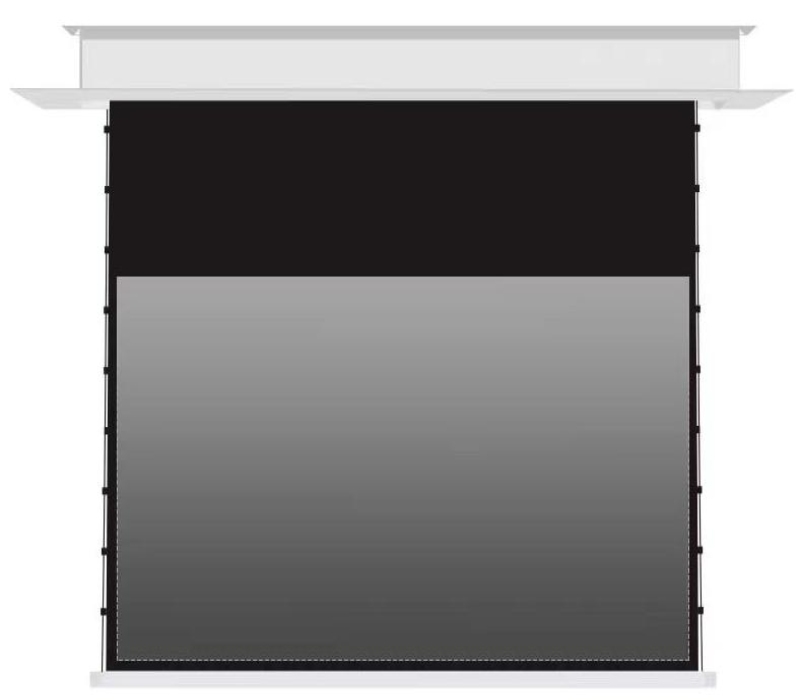
| Recessed ceiling case | Housing is concealed within the ceiling | Ceiling space and service access need planning |
| Floor-rising case | Screen returns to a low housing | Wall fixing is avoided; a floor footprint remains |
The layout comparison narrows the mechanical choice. It leaves a separate question: whether the deployed surface is suitable for the image being projected.
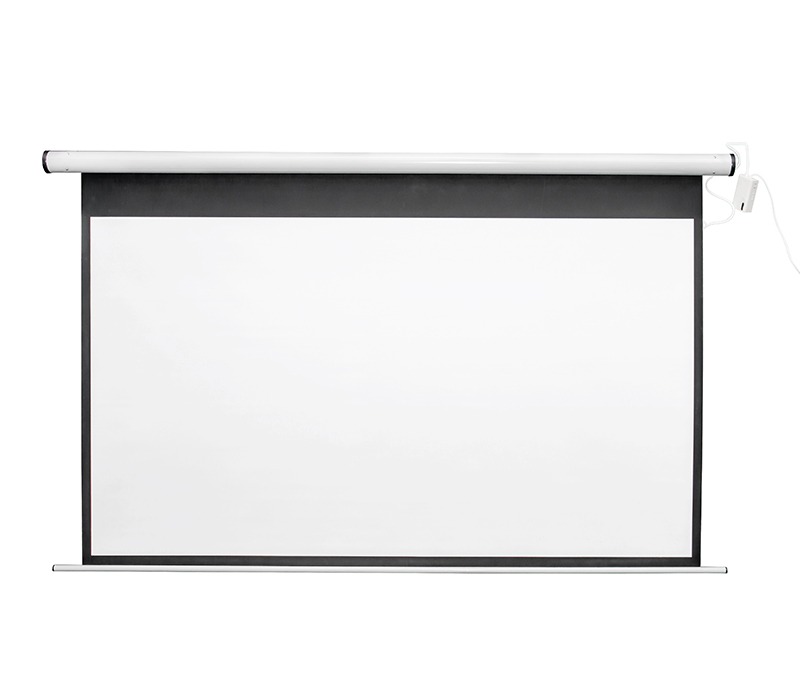
How the screen stays flat after deployment
Flatness matters because the fabric itself forms the image plane. Edge curl or waves can bend projected lines, making a presentation grid or subtitle look uneven. A screen may travel smoothly while still having a visible surface problem.
A tensioned projector screen uses a tensioning arrangement to help keep the surface taut. Side tabs and cords address lateral tension, while the screen’s structure supports its deployed shape. The exact mechanism varies, and adding a motor does not automatically add side tension.
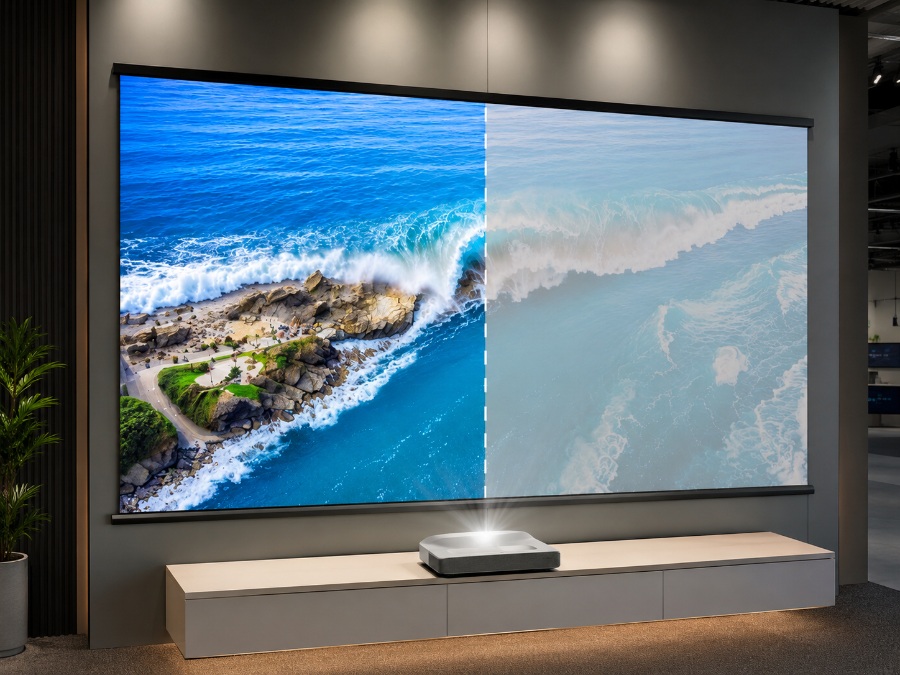
UST projection makes surface shape especially important because light reaches the screen from a steep angle. For a showroom demonstration, a grid and ordinary presentation text are useful alongside film footage. Examine the deployed image from the seats people will actually use. Flatness is only part of that assessment; the fabric must also receive the projector’s light correctly.
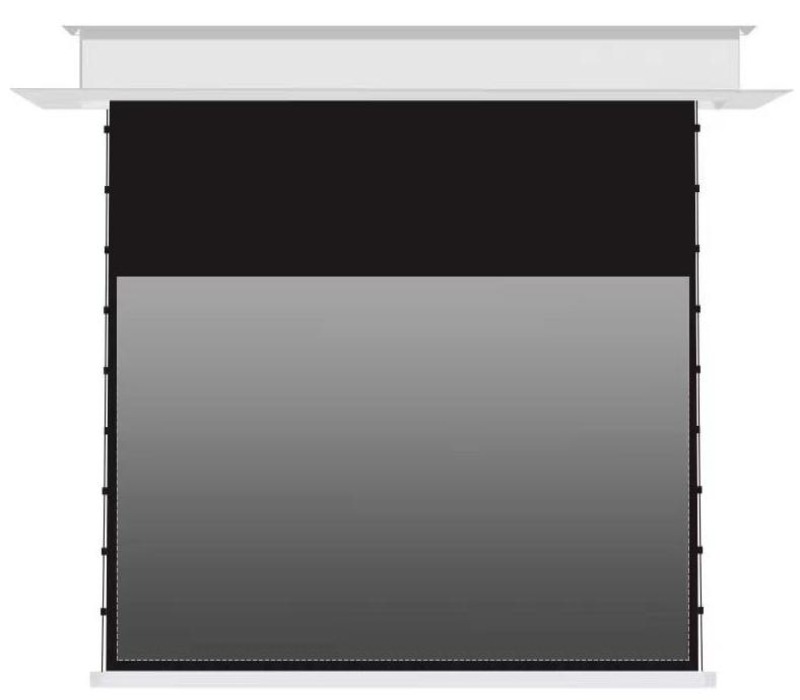
Why projector throw changes the fabric choice
Throw compatibility comes from the combination of screen material and projector position. A standard-throw projector sits farther from the screen, while an ultra-short-throw unit projects upward from nearby. A directional optical surface designed for one arrangement may be unsuitable for the other.
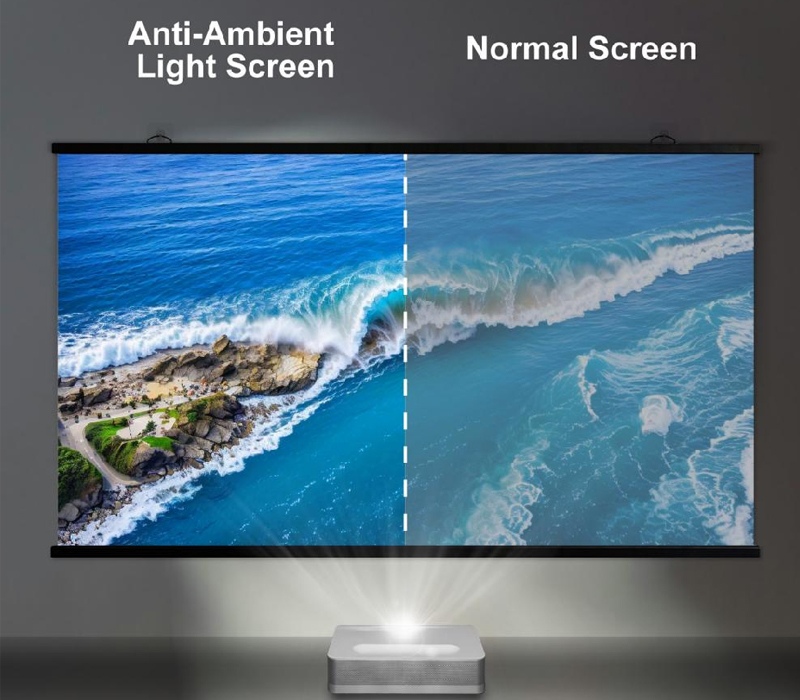
Ambient light rejecting material works by treating incoming light differently according to its direction. A UST-compatible ALR surface therefore needs the correct orientation and projector placement. The words “ALR,” “Fresnel,” and “retractable” do not, by themselves, establish that a screen accepts a particular throw geometry.
A ceiling-drop screen specified for long-throw projection should stay within that scope, even if it has Fresnel fabric and side tension. Those features cannot establish UST compatibility.
Room lighting and seating complete the optical match. Demonstrate the intended material with the room lights in their normal positions and inspect it from off-centre seats. Reducing light that falls on the screen can still help. Retraction changes how the room looks between sessions; it cannot compensate for an incompatible optical surface during viewing.
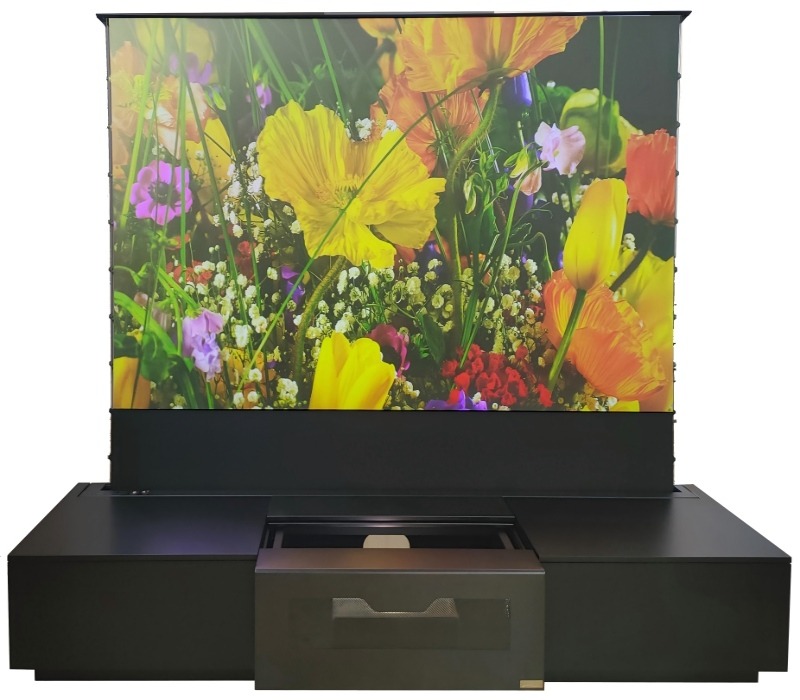
When the screen becomes part of the furniture
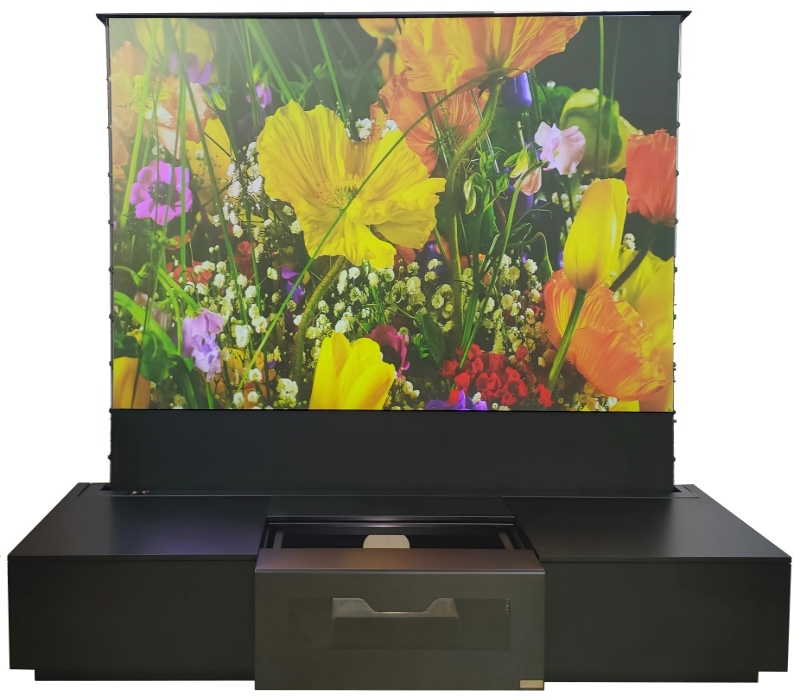
A furniture installation has to accommodate the projector as well as the moving screen. That makes a floor rising projector screen cabinet relevant when the goal is to conceal the AV system between sessions. Aoxing’s One-Tap Cinema Smart Cabinet integrates a UST laser projector, electric floor-rising screen, surround sound, and smart control within one furniture system.
The cabinet offers 100-inch and 120-inch screen options, which describe the screen diagonal rather than the furniture footprint. The larger image still needs a compatible projector position and enough room for comfortable viewing. Cabinet dimensions, the screen’s travel, and the projector’s ventilation requirements should be checked together for the chosen configuration.
Integrated control can reduce the number of separate actions needed to begin viewing. Lighting adjustment depends on the supported configuration; it should not be assumed from the presence of a remote. During a demonstration, check the complete sequence from the closed cabinet to the stable projected image, then back to storage.
Daily operation and surface care
A repeatable stopping position helps the image return to its intended place. If the screen stops differently between sessions, verify the model’s setup and control instructions before changing projector alignment. Persistent uneven travel or rubbing needs investigation rather than repeated cycling.
Surface care should follow the instructions for the particular material. An optical coating may need different treatment from ordinary matte white fabric. Avoid choosing a household cleaner simply because it works on glass, and seek product-specific guidance for stubborn marks. A distributor’s handover should make the normal controls and appropriate cleaning method easy to identify.
A screen that suits both room uses
The right retractable screen fits the room when stored and supports the intended picture when deployed. Housing position resolves the space question; tension and optical compatibility resolve the viewing question. For shared spaces, a demonstration of the complete operating cycle connects those choices more clearly than a list of features.
FAQ는
Is a floor-rising screen retractable?
Yes. Its viewing surface retracts into a housing below the image. “Floor-rising” identifies the direction of deployment, while “retractable” describes its ability to return to storage. The housing still needs space in the room.
Does a retractable screen have to be motorized?
No. Manual and motorized versions are available. Choose the operating method around access and everyday use. A manual mechanism can suit a reachable installation; remote operation can help where the screen is mounted higher.
Can a retractable screen work with a UST projector?
Yes, when its material, orientation, and surface structure are suitable for UST projection. Some electric screens are intended for standard throw only. Confirm compatibility for the complete screen configuration rather than relying on its drive type.
Does tab tension make a screen reject ambient light?
No. Tab tension helps manage the screen’s physical shape. Ambient light rejection is an optical property of the viewing material. A screen may need both, but they answer different image-quality problems.
Can any floor-rising screen go inside a cabinet?
Do not assume so. The enclosure must accommodate the housing, deployment path, cables, and necessary access. A complete UST furniture system also has to allow the projector’s required position and ventilation. Check the specific installation arrangement before enclosing equipment.
최근 게시물
-
 Fresnel ALR vs Lenticular CLR for UST Projectors9월 10, 2026
 -
-
 What Makes a Mobile Whiteboard Stand Reliable?8월 27, 2026
REQUEST A PROJECT QUOTE