
Projector Screen Materials for Real AV Rooms
-
 저자
저자 - 10월 14, 2026
A screen surface becomes a visible part of every AV installation the moment room light, seating, and projector placement stop behaving like a demo room. For distributors and integrators, the useful question is not which material sounds most advanced; it is which optical behavior will stay credible in the client’s actual room.
The room decides what the surface must do
The best starting point for projector screen materials is a simple room-light map: identify daylight, ceiling fixtures, side light, wall reflections, and the hours when the system is used. A surface that looks excellent after blackout curtains are closed may not protect contrast during an afternoon presentation.
Projector type comes next because the light path is part of the material decision. A conventional long-throw unit and an ultra-short-throw projector illuminate the surface from very different positions. Directional optical layers can be effective only when their intended projector geometry, screen orientation, and seating pattern are respected.
Screen format should follow these two checks, not precede them. A flexible surface may suit a retractable installation, while a rigid optical surface often belongs in a stable frame. That is a practical fit question, not a hierarchy of good and bad materials.
Four material families solve different problems
Material labels are useful shorthand, but they do not replace a system match. The table below keeps the discussion focused on the decision each family supports rather than treating a material name as a promise of image quality.
| Material family | Best decision context | What to confirm |
| PVC | Controlled-light rooms using a conventional projector | Surface uniformity, format, and whether a PVC projector screen is intended for the selected mechanism |
| PET optical film | Projects that need a directional optical layer | Projector type, orientation, viewing positions, and frame stability |
| Fiberglass-supported surface | Large or tensioned formats where support matters | Flatness after installation, tension method, and transport handling |
| Fresnel optical layer | Bright-room or UST-focused systems needing directional light control | Compatible throw geometry, seating cone, and whether the structure suits the installation |
PVC and fiberglass: keep the decision structural
A PVC projector screen can be a sensible choice when the project calls for a familiar, flexible surface and the room light is manageable. The evaluation should stay concrete: ask how the screen will be stored or tensioned, how flat the image area must remain, and whether the expected projector brightness fits the room.
Fiberglass-supported surfaces are usually considered when a project benefits from added support across a wider image area. That does not make them an automatic upgrade. Dealers still need to judge installation precision, transport protection, and the screen format, because an otherwise suitable surface can disappoint if its final plane is uneven.
PET and optical layers: evaluate the light path
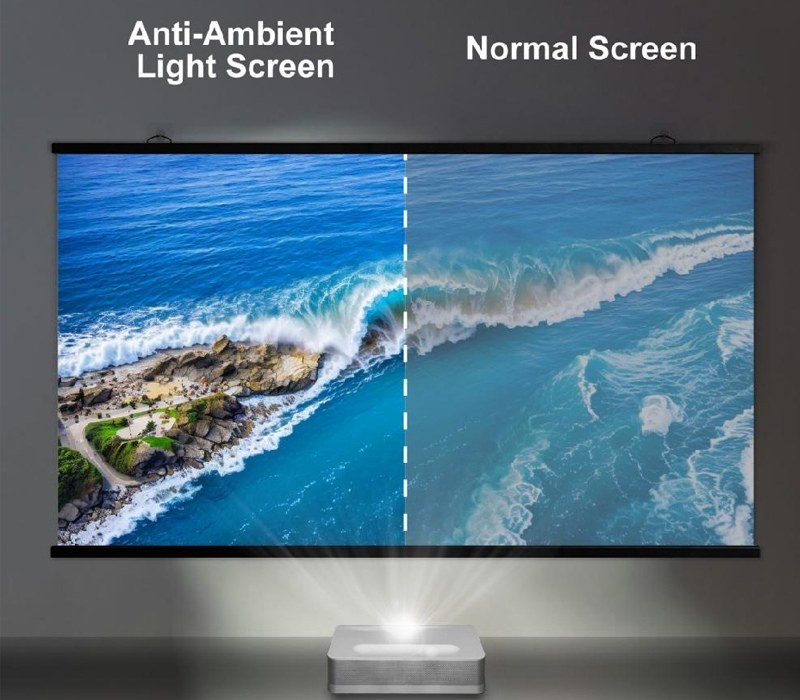
A PET projector screen becomes more relevant when the goal is directional light management rather than a neutral, broadly diffusive surface. In an anti-light fixed-frame format, PET can serve as a supporting layer beneath an optical surface. The important field check is whether the projector and ambient-light directions suit that optical design.
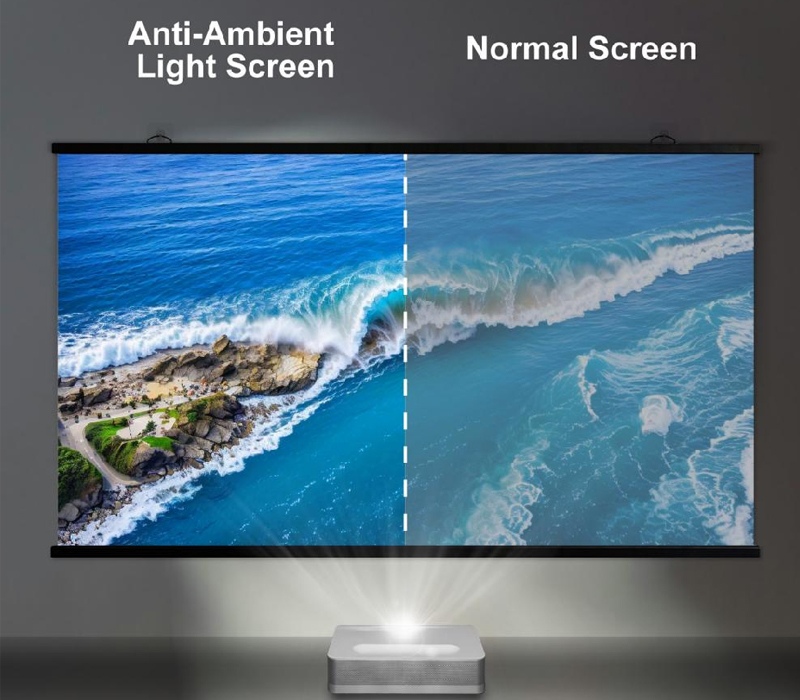
When an 주변광 차단 스크린 소재 is assessed, gain alone is insufficient. Ask whether viewers will sit across a wide sofa or inside a narrower centered zone, whether overhead light is the real problem, and whether walls or windows create side reflections. Those answers are more revealing than a single headline performance figure.
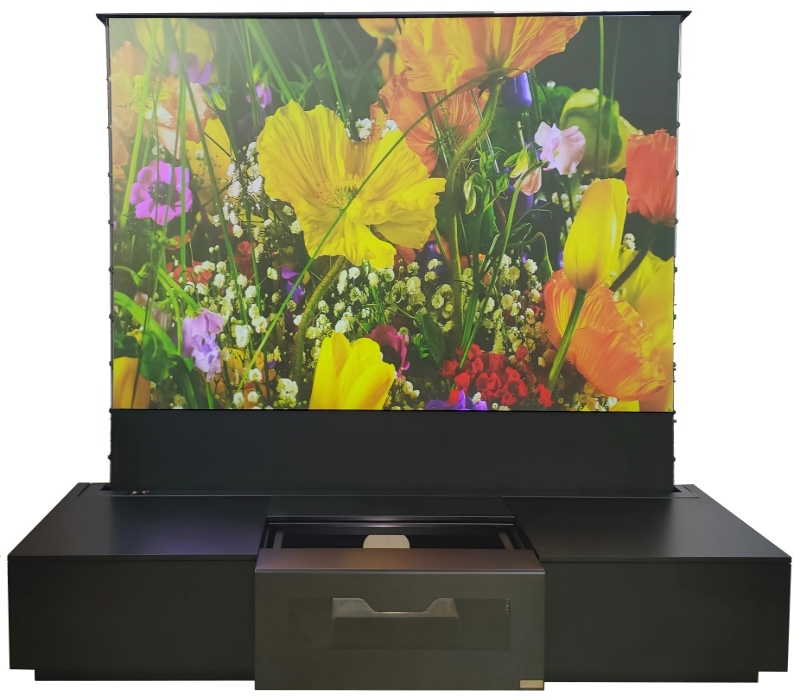
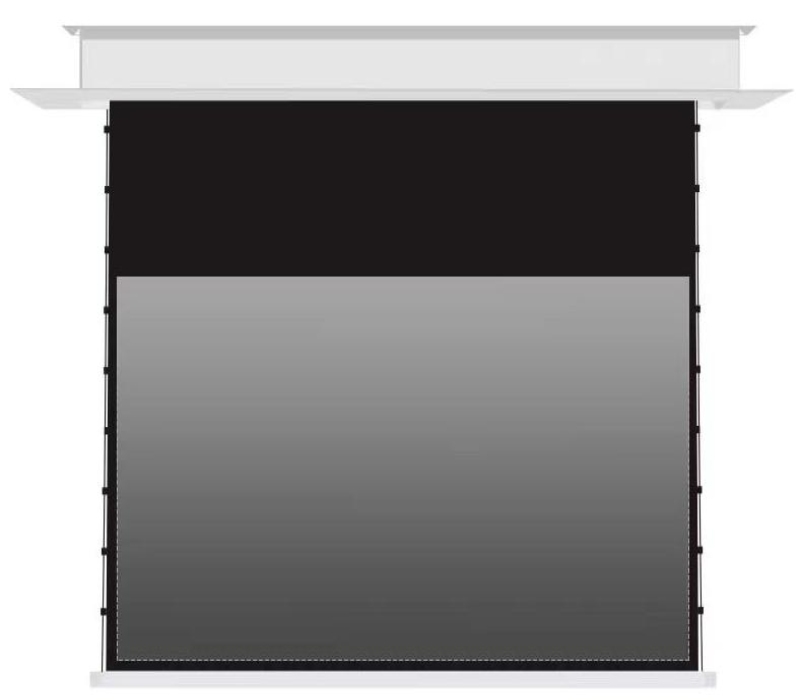
Aoxing’s fixed-frame anti-light model illustrates the need for this system view: it pairs a PET backing with a PTU-and-prism optical surface and is configured for ultra-short-throw projection. That combination belongs in a conversation about directional light and stable mounting, not a generic claim that PET will improve every room.
Fresnel calls for a projector-specific conversation
Fresnel structures are optical tools, so alignment deserves more attention than a general material comparison. Their fine surface geometry is intended to manage light direction; a wrong projector position, reversed screen, or misplaced seating can undermine the reason the material was selected in the first place.
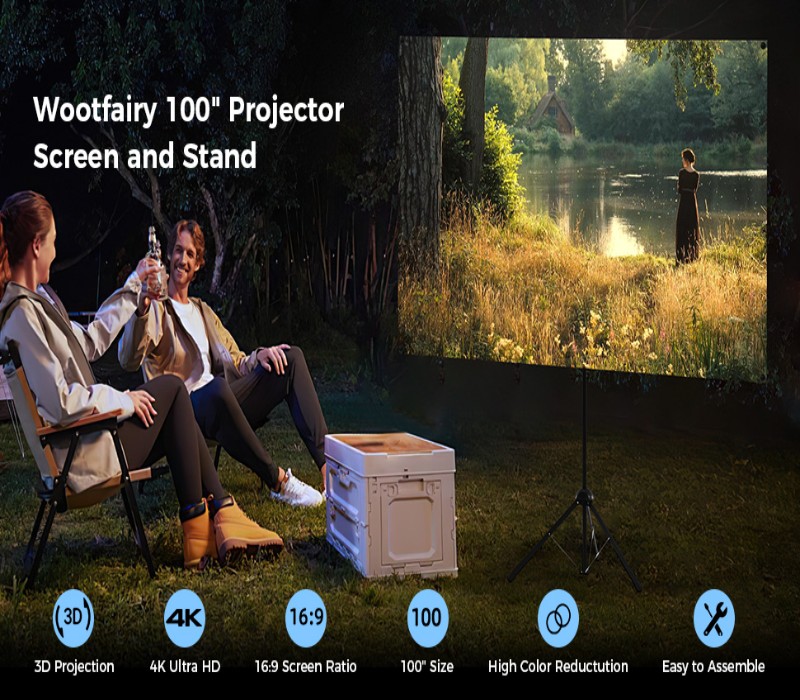
A portable Fresnel ALR screen can add flexibility when a bright meeting room, temporary display, or rented space needs a fast screen setup. Aoxing’s portable Fresnel model uses a Fresnel PET surface with an aluminum frame and is offered from 60 to 100 inches, so the format can be assessed alongside mobility rather than as a fixed-install substitute.
For UST projects, the sample review should include the exact projector model, the proposed diagonal size, room-light direction, and seating spread. This prevents a common handoff error: approving an optical surface on a small centered demo, then discovering that the installed room has different geometry.
- Confirm the projector’s throw type before selecting a directional optical surface.
- View a material sample under the room’s likely daytime or presentation lighting.
- Check the seating width and eye-line range, not only the center seat.
- Match the material to the screen structure: fixed frame, portable frame, or another suitable format.
A short approval process prevents a long rework
A material shortlist becomes reliable when it is tested against the room, projector, and viewing pattern together. Start with the lighting problem, narrow the projector geometry, then compare samples or demonstrations in the intended seating zone. That sequence keeps a surface choice connected to the viewing result the client actually expects.
This approach also helps distributors explain trade-offs without turning the conversation into a specification recital. A simple surface may be right for a darkened room, while a fixed frame ALR screen may earn its place where ambient light and UST geometry are central constraints.
The practical takeaway
The strongest material choice is the one that fits the room’s light, the projector’s path, the seating pattern, and the screen structure at the same time. Use PVC, PET, fiberglass, or Fresnel as starting categories, then make the final call with a project-specific light-and-geometry check. That gives an AV team a defensible recommendation without turning the screen into a feature checklist.
FAQ는
Is PVC always the lowest-cost projector screen material?
PVC is often considered for accessible flexible screen formats, but cost alone does not determine suitability. The right comparison includes room light, projector type, flatness needs, and the structure that will hold the surface.
Does a PET projector screen always work with a UST projector?
No. PET describes a material layer, not a universal optical result. Confirm the finished surface design, screen direction, and the projector geometry before specifying a UST installation.
When is a Fresnel ALR screen worth considering?
It is worth discussing when a project needs directional light control and the projector, seating, and room-light pattern can be matched to the optical surface. A sample check is especially useful for bright or multipurpose rooms.
Can a gray surface replace ambient-light rejection?
A darker surface can change perceived contrast, but color alone does not establish directional ambient-light control. Review the lighting directions and the surface’s intended optical behavior before treating the two as equivalent.
What should a distributor request before approving a screen material?
Request the projector model and throw type, room-light notes, desired image size, installation format, and seating layout. Those inputs turn a broad material discussion into a screen recommendation that can be checked before installation.
최근 게시물
-
 How to Test an ALR Screen Before Bulk Ordering10월 7, 2026
 -
 120 Inch ALR Projector Screen Size and Room Fit9월 30, 2026
 -
REQUEST A PROJECT QUOTE