
Why Blackout Projector Screens Are Essential for Home Theater Setups
-
 author
 - February 26, 2026
Picture magic happens at home not just by tossing in a snazzy projector. Top-tier 4K or 8K laser machines often fall short if the wall behind them doesn’t measure up. For deep blacks that hold sharp colors steady, a true blackout screen does heavy lifting where video magic takes shape.
Unlike ordinary white walls or entry-level screens, blackout projector screen is engineered to manage light behavior, preserves black levels, and provides a uniformly flat projection surface. Blackout screen is not a single material, but a system-level solution combining optical control, contrast materials, and mechanical flatness.
This guide explains why screen material, optical structure, and mechanical design—such as a ust projector screen motorized system or advanced ALR technology—are critical for elevating real-world viewing performance.
Understanding Light Control: The Core of the “Blackout” Experience
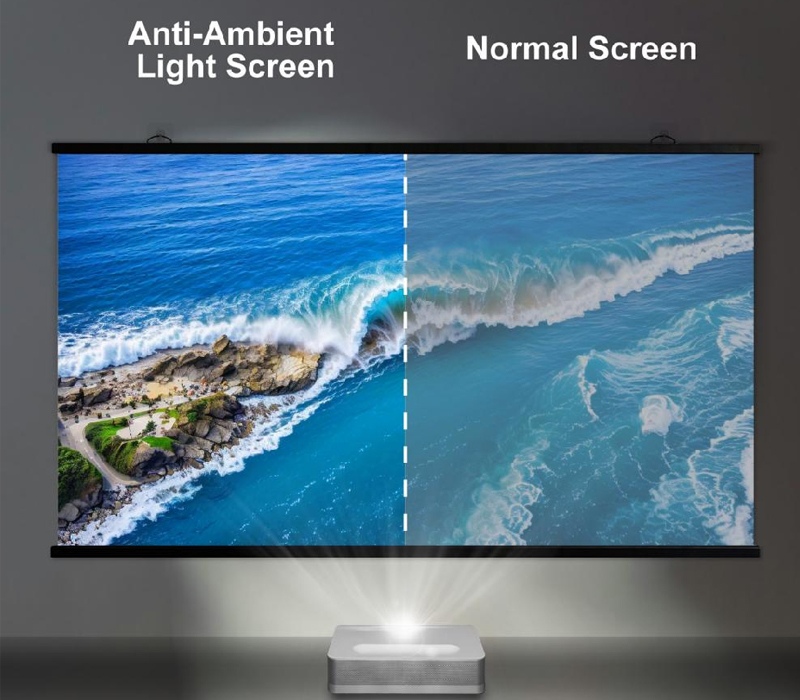
In projection environments, “blackout” does not simply mean darkening the room. It refers to a screen’s ability to maintain deep blacks and high contrast ratios even when ambient light is present. Standard projection surfaces reflect light indiscriminately, which causes blacks to appear grey and reduces image depth.
Ambient Light as the Primary Performance Limiter
Most home theaters are installed in living rooms rather than sealed cinema rooms. Daylight leakage, ceiling fixtures, and reflected light from walls all compete with the projected image. Without proper light management, even a high-lumen projector will suffer visible contrast loss.
High-performance blackout screens mitigate this problem through two engineered approaches:
- Ambient Light Rejecting (ALR / CLR® materials):Microscopic optical layers redirect projector light toward viewers while deflecting off-axis ambient light from ceilings and walls.
- High-contrast screen materials:Grey PVC and advanced PET-based surfaces absorb excess light, improving perceived black depth by reducing reflectivity.
Independent testing shows that high-quality ALR materials can improve perceived contrast by 2–3× compared to matte white screens in moderately lit rooms.
When Blackout Screens Matter Most: UST Projector Applications
Ultra-short-throw projectors have reshaped modern home theater layouts by enabling large images from extremely short distances. However, their steep upward projection angle creates unique optical challenges that standard screens cannot solve.
In professional-grade motorized projection systems, manufacturers such as Aoxing, with decades of experience in screen engineering, typically combine Fresnel ALR optics with precision tension control to ensure stable brightness and long-term flatness in UST applications.
Fresnel ALR Optics for UST Applications
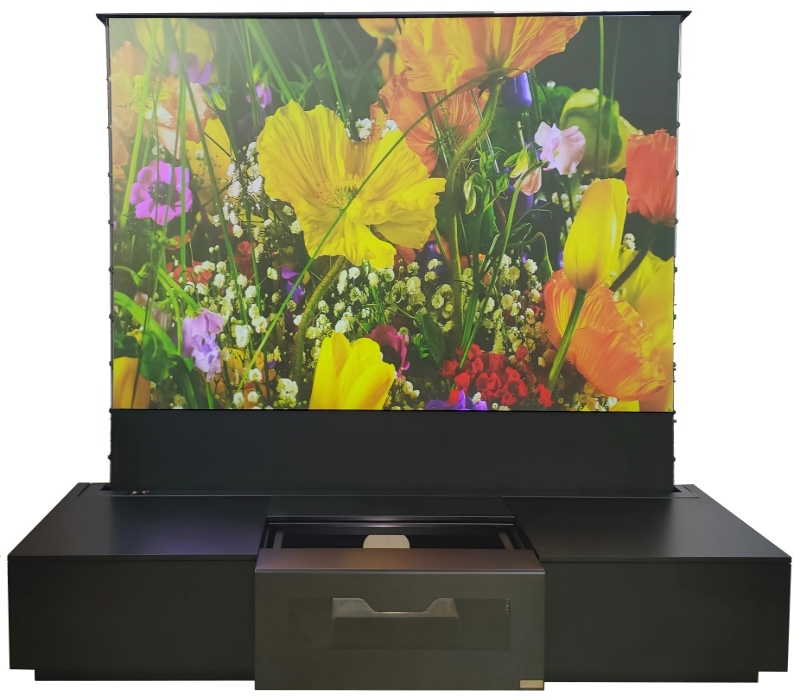
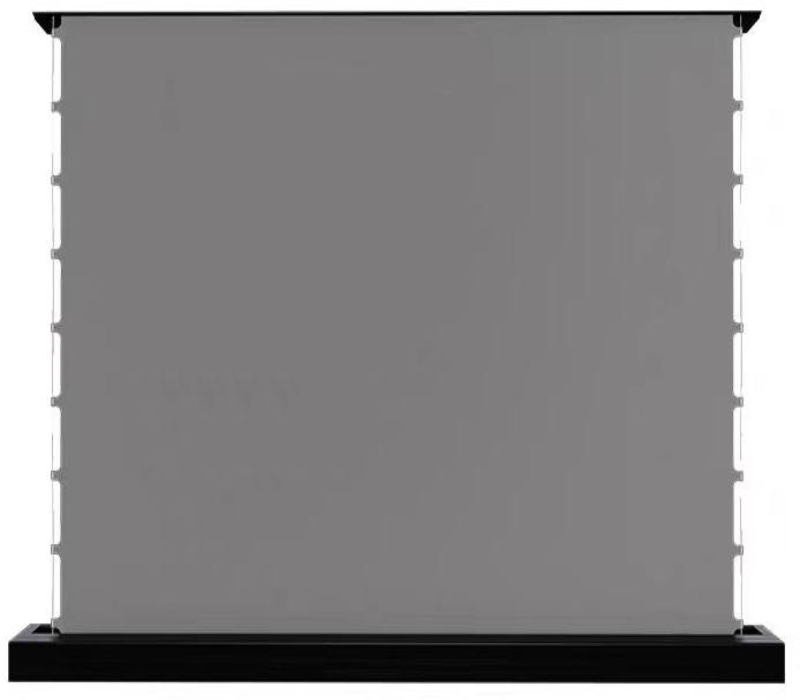
A dedicated UST projector screen motorized solution typically uses Fresnel ALR technology. Unlike linear ALR surfaces, Fresnel structures use concentric optical grooves designed specifically to capture light from below and redirect it horizontally toward the seating area.
This structure delivers three critical benefits:
- Maximized brightness efficiency from UST projectors
- Effective rejection of overhead lighting
- Improved edge-to-edge uniformity on large-format screens
Motorized Integration for Multi-Use Spaces
Permanent fixed-frame screens are not always practical in modern interiors. Motorized systems offer flexibility without sacrificing performance.
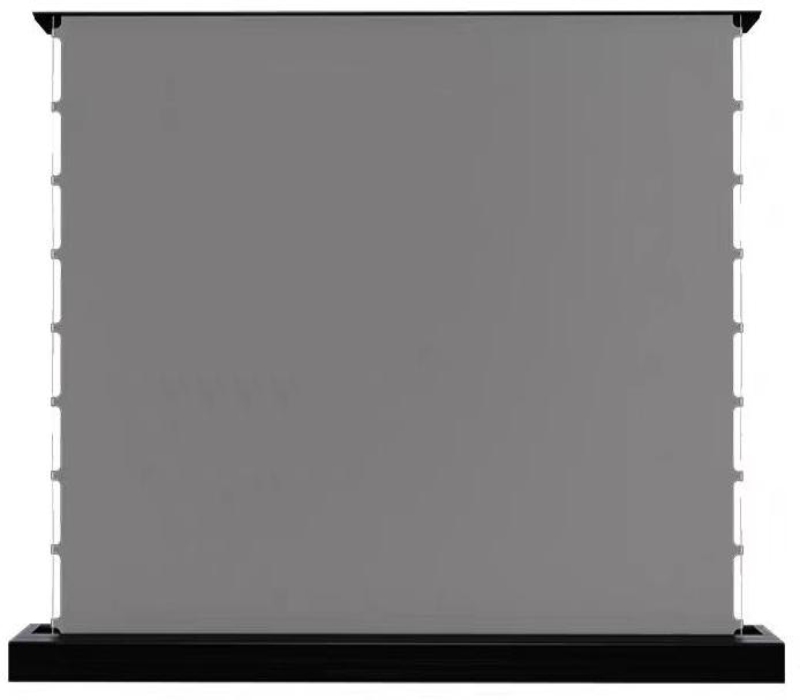
- Electric floor-rising screensdeploy vertically from a compact cabinet, eliminating wall or ceiling installation.
- Low-noise tubular motors, typically operating below 30 dB, ensure deployment does not disrupt the viewing experience.
These features make motorized UST screens ideal for living rooms, apartments, and mixed-use entertainment spaces.
Why Screen Flatness Is Non-Negotiable for High-Resolution Projection
As resolution increases, surface imperfections become more visible. Even minor waves or curls in screen material can distort straight lines and introduce motion artifacts during camera pans.
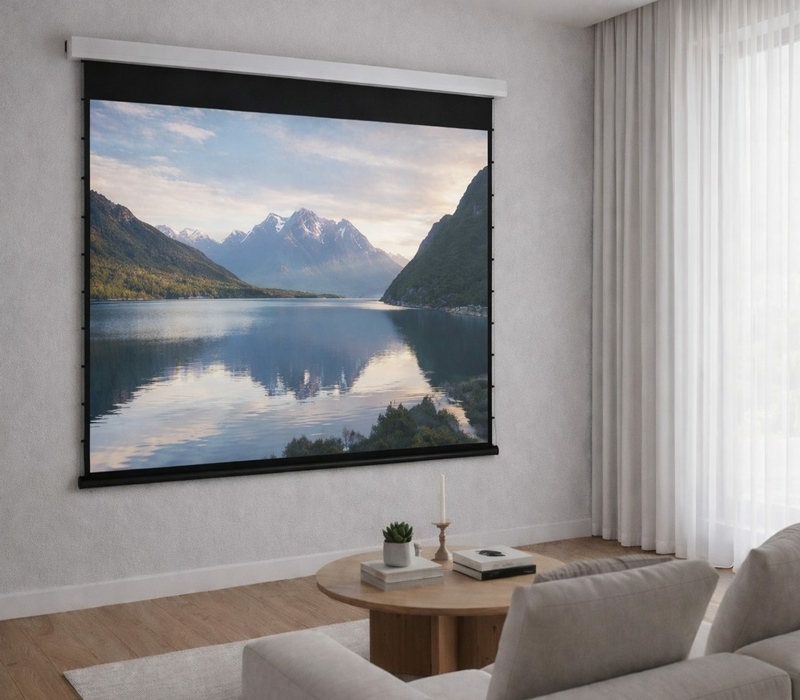
Electric Tab-Tensioned Screen Technology Explained
Professional-grade setups rely on electric tab-tensioned screens to maintain long-term flatness:
- Side-mounted tension tabsdistribute lateral force evenly across the screen.
- Independent tensioning motorsapply consistent pull, preventing edge curl and center sag.
- Result:a stable, mirror-flat surface optimized for 4K and 8K projection.
For viewers investing in premium projection equipment, tab-tensioning is not a luxury feature—it is a functional necessity.
Choosing the Right Screen Configuration for Your Space
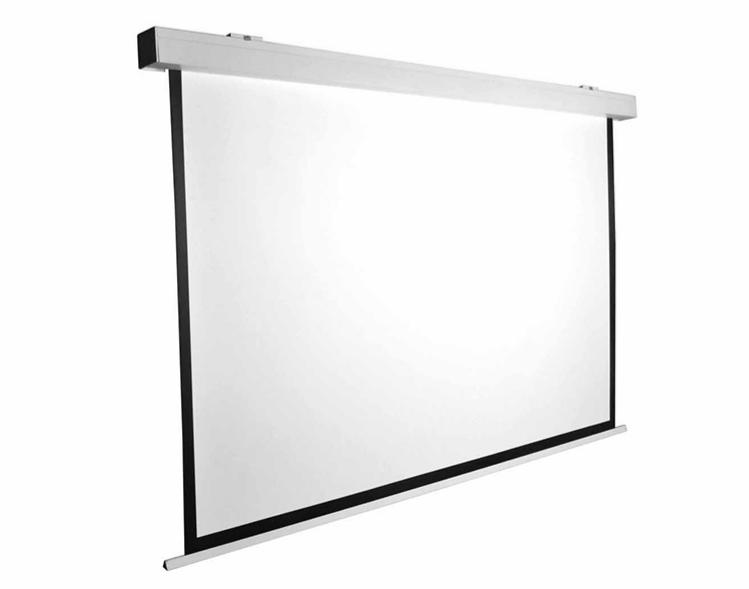
Different environments require different screen mechanisms and materials. The table below outlines common projector screen configurations and their optimal use cases.
| Screen Series | Mechanism | Best Application Scenarios | Key Material Options |
| Manual Series | Pull-cord | Budget home setups, classrooms | White Matte, Glass Fiber |
| Standard Electric | Motorized | Living rooms, meeting spaces | White Matte, PVC |
| Electric Floor-Rising | Motorized from ground | Decorated living rooms, UST setups | Fresnel ALR, Grey PVC |
| Fixed Frame | Permanent frame | Dedicated home theaters | PVC, PET, Glass Fiber |
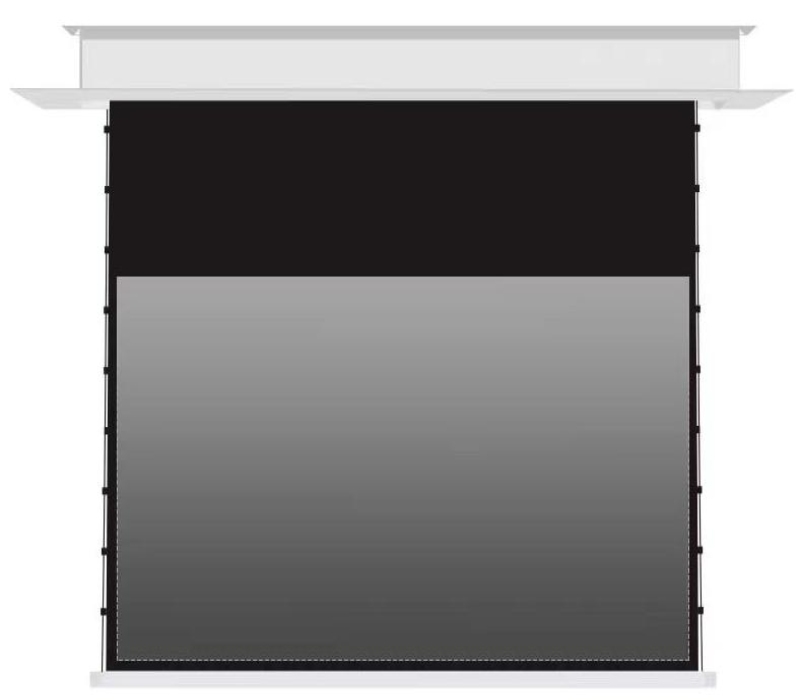
| Ceiling Drop | Hidden ceiling motor | High-end minimalist interiors | White Matte, PVC |
Selecting the appropriate mechanism ensures long-term usability and visual consistency without compromising room aesthetics.
Why Motorised Projector Screen Prices Vary So Widely?
When evaluating motorised projector screen price, factors beyond size and brand deserve equal attention. Long-term performance, reliability, and image quality are largely determined by the screen’s internal components, materials, and tensioning system.
Key cost drivers include:
- Motor systems:High-torque tubular motors provide smoother operation and longer service life.
- Casing construction:Metal housings with electrostatic coating resist deformation and vibration better than plastic enclosures.
- Optical coatings:Advanced ALR and high-contrast layers require precision manufacturing but are essential for blackout performance.
- Smart integration:Compatibility with home automation systems adds functional value for modern users.
A higher initial investment often results in lower long-term ownership costs due to reduced maintenance and consistent performance.
Conclusion
Strength in a projection setup comes down to its lowest point. When it comes to the screen, using the right one shields spending on high-end projectors while keeping images steady across time. A space might host either—a darkened room with a fixed blackout screen or a living area where an automated ust unit slides into place—but both demand sharp visuals along with reliable movement. What matters most stays consistent: how well light is blocked and how smoothly parts move when called upon.
For close to forty years in business, Aoxing has built a reputation on trustworthy, powerful projector screens meeting global quality norms. Whether it is small transportable units or custom-built smart workstations, one thing stays clear—creating deep visual connections comes first, shaped by careful technical planning.
FAQ
Q: Why is a blackout ALR screen better than a standard white screen?
A: Standard white screens reflect ambient light in all directions, which reduces contrast. A blackout ALR screen selectively reflects projector light toward viewers while rejecting room light, preserving black levels and color saturation.
Q: Are floor-rising screens safe for homes with children or pets?
A: Yes. Premium models feature weighted aluminum bases for stability and fully retractable screen material to prevent accidental damage.
Q: Is tab-tensioning necessary for 4K projection?
A: For high-resolution projection, tab-tensioning is strongly recommended. It eliminates ripples that become visible at higher pixel densities.
Q: What screen material works best in bright rooms?
A: Fresnel ALR or high-contrast grey PVC materials perform best in environments with uncontrolled ambient light.
Q: How can I keep the screen hidden when not in use?
A: Electric ceiling drop screens and electric floor-rising screens both offer clean, minimalist concealment options.
Recent Posts
-
 Best Mobile Whiteboards on Wheels for 2026: Top Picks for Every OfficeFebruary 19, 2026
 -

-

RELATED PRODUCTS
Your right choice today, our resplendent tomorrow!
Contact Us
Get personalized solar storage advice for system choice & savings.