

ALR vs White Screen: Which Ambient Light Projector Screen Is Better for Boardrooms?
-
 著者
著者 - 5月 21, 2026
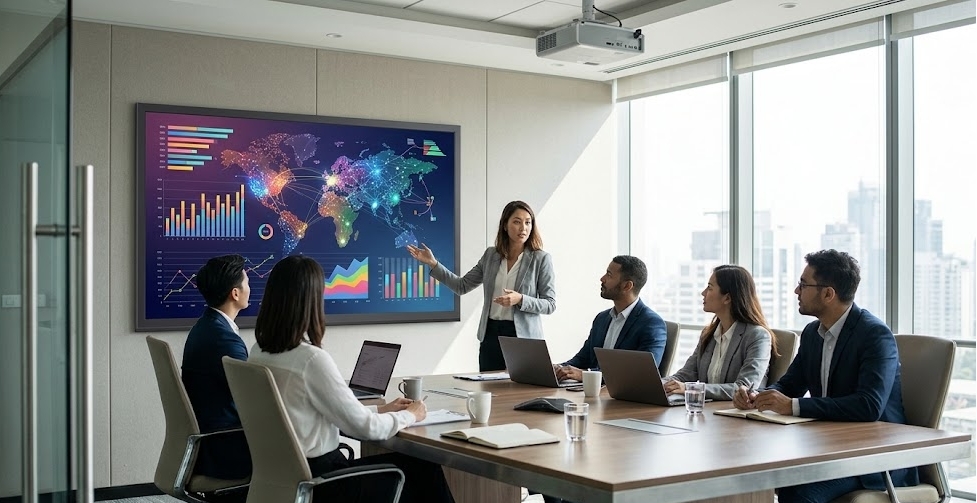
Modern boardrooms are no longer dark, enclosed meeting spaces with fully controlled lighting. Open office layouts, glass walls, LED ceiling lights, and hybrid collaboration systems have completely changed how projection systems perform in commercial environments. Under these conditions, choosing between an alr vs white screen setup directly impacts presentation clarity, meeting efficiency, and overall client experience.
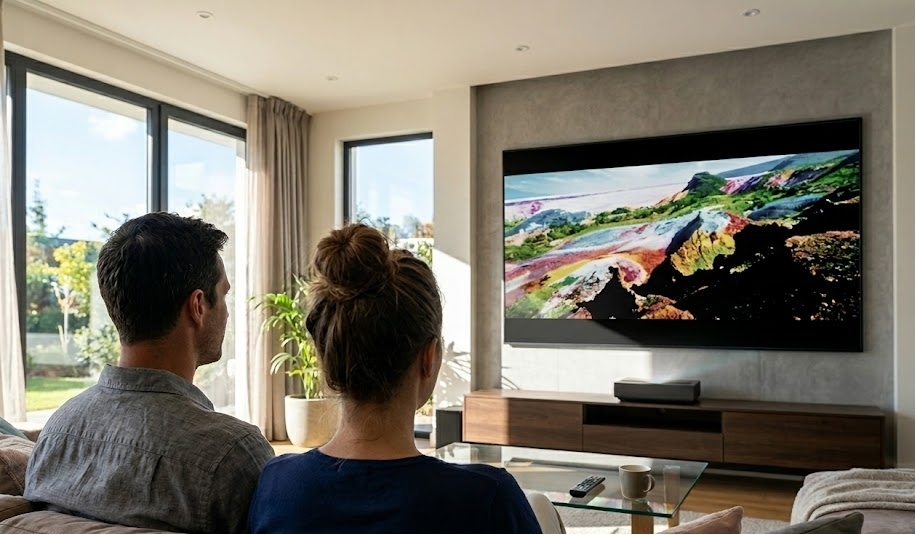
For businesses upgrading conference rooms, a projector screen for bright room environments has become an essential part of modern communication infrastructure. Traditional white projection screens often struggle under ambient lighting, while advanced ambient light rejecting technologies are specifically designed to maintain image quality in bright spaces.
The discussion around ambient light rejecting screen vs white solutions is no longer limited to home theater applications. Corporate boardrooms, training centers, and executive meeting spaces increasingly rely on ALR technology to deliver sharp, high-contrast visuals throughout the workday.
What Makes an Ambient Light Rejecting Screen Different From a White Screen?
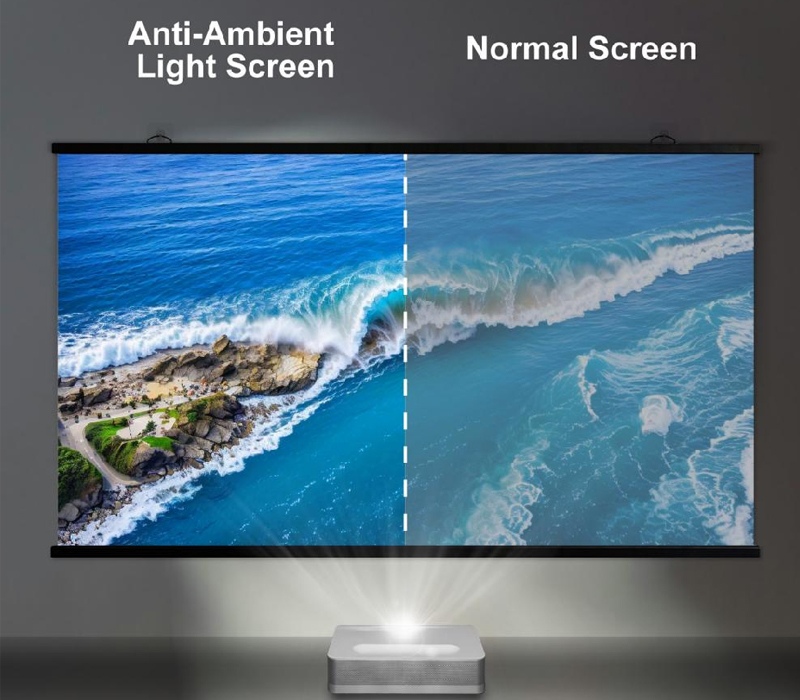
A standard white projection screen reflects light evenly in all directions. While this works reasonably well in dark rooms, excessive ambient light quickly reduces contrast and washes out projected images in office environments.
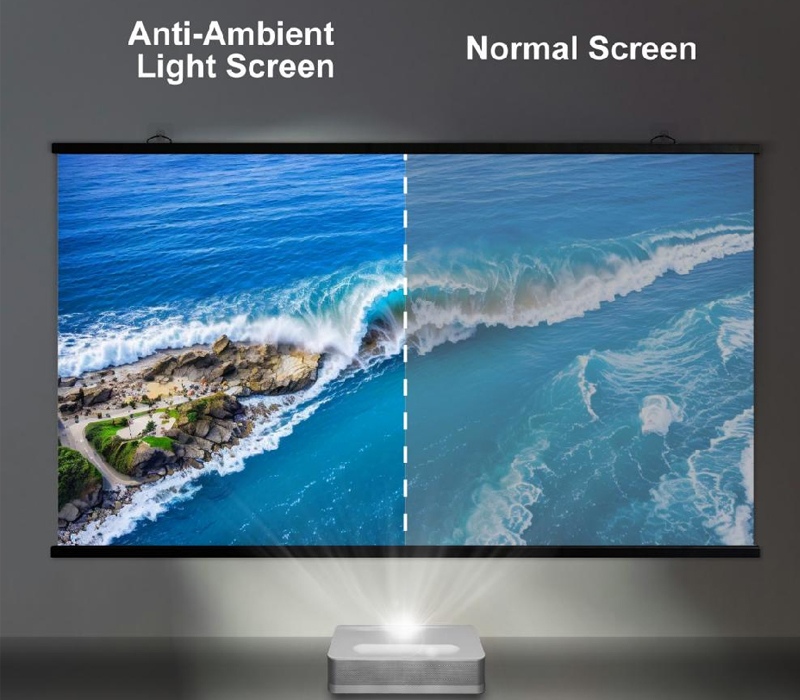
An ambient light rejecting screen uses optical surface technology to direct projector light toward viewers while minimizing interference from ceiling lights and daylight exposure.
The difference between an alr screen vs white screen becomes immediately noticeable in conference rooms where ambient lighting cannot be fully controlled.
Key advantages of ALR technology include:
- Higher perceived brightness
- Improved black levels
- Better text readability
- Reduced glare and reflections
- More accurate color reproduction
In executive meeting rooms where presentations take place throughout the day, these improvements create a more professional and comfortable viewing experience.
Why Does a Projector Screen for Bright Room Environments Matter?
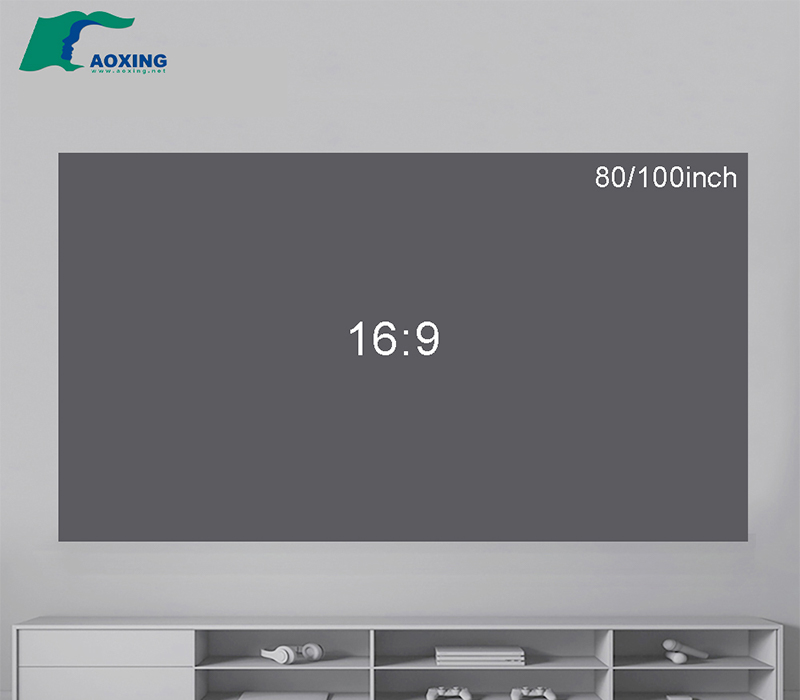
Most corporate meeting rooms contain multiple light sources, including:
- Overhead LED lighting
- Daylight from windows
- Glass wall reflections
- Video conferencing lighting
- Open-office ambient illumination
Traditional white screens struggle in these conditions because ambient light spreads across the surface and lowers image contrast.
A. professional projector screen designed for bright environments helps maintain image clarity without requiring the room to be darkened.
This provides several business advantages:
- Improved visibility for charts and spreadsheets
- Better audience engagement during presentations
- Reduced eye strain during long meetings
- More professional client-facing demonstrations
- Clearer visuals for hybrid collaboration sessions
For modern workplaces, the best screen for ambient light conditions is no longer a luxury feature. It has become a practical requirement for efficient communication.
How Does Ambient Light Rejecting Screen Material Improve Performance?
The performance of an ALR system depends heavily on the structure of the ambient light rejecting screen material.
Unlike traditional matte white surfaces, ALR materials use layered optical coatings and directional reflection technology to absorb or redirect unwanted light.
Different screen materials provide different levels of ambient light rejection:
| スクリーン材料 | 周囲光抑制 | Recommended Application |
| Matte White PVC | 低い | Dark meeting rooms |
| Grey Contrast Screen | 中程度 | Moderate office lighting |
| Glass Fiber ALR | 高い | Professional conference rooms |
| Fresnel ALR Screen | Extremely High | Executive boardrooms |
Modern ALR materials are designed to improve:
- Contrast performance
- Color accuracy
- Image sharpness
- Viewing consistency
- Daytime visibility
Commercial installation experience from Aoxing shows that Fresnel Ambient Light Rejecting screen systems perform especially well in premium conference spaces where ceiling lighting and daylight exposure cannot be avoided.
Why Is Fresnel ALR Screen Technology Popular in Boardrooms?
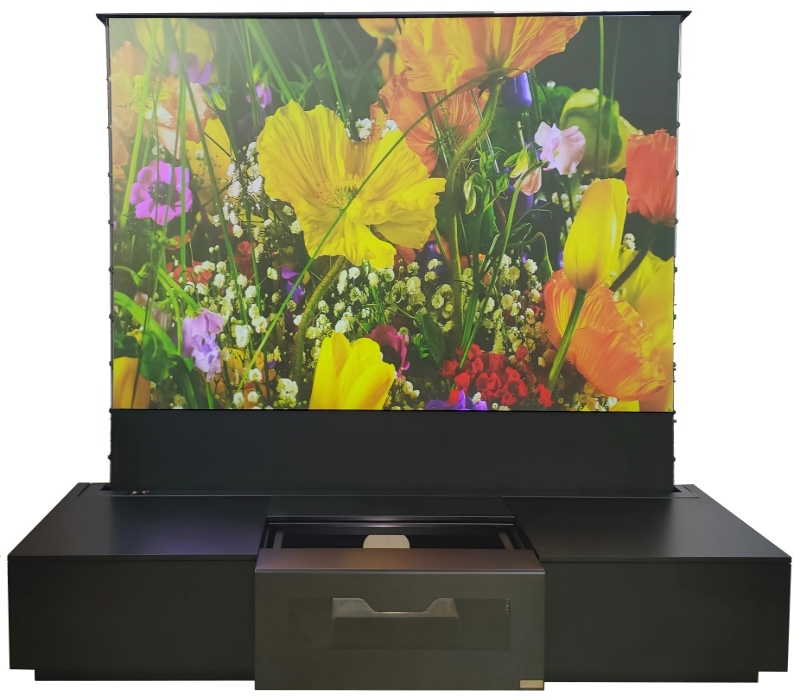
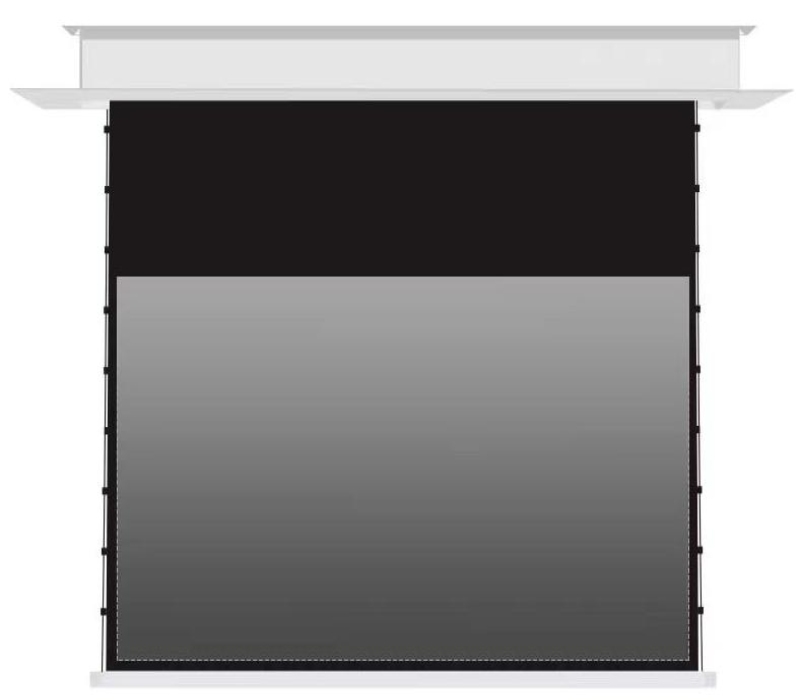
A. fresnel alr screen is one of the most advanced projection screen technologies available for commercial environments.
Unlike standard ALR materials, Fresnel screens use concentric optical layers to direct projector light toward viewers while blocking overhead lighting interference.
This technology delivers several important benefits:
- Exceptional contrast under bright lighting
- Higher perceived brightness
- Reduced hotspotting
- Improved image uniformity
- Better compatibility with ultra short throw projectors
A fresnel alr screen is particularly suitable for:
- Executive boardrooms
- Smart conference systems
- Corporate training centers
- Hybrid collaboration spaces
- Premium presentation environments
For businesses using ultra short throw laser projectors, Fresnel technology also helps reduce shadow interference while creating cleaner installation layouts.
How Does ALR vs White Screen Performance Compare in Commercial Spaces?
The performance gap between alr vs white screen technologies becomes much more obvious in modern office environments.
The following comparison highlights the key differences:
| 特性 | White Screen | Ambient Light Rejecting Screen |
| Bright Room Performance | 貧しい | 優秀 |
| Contrast Under Office Lighting | 低い | 高い |
| Color Saturation | Washed Out | Rich and Accurate |
| Text Readability | 適度 | 優秀 |
| Daytime Presentation Quality | Weak | Strong |
| Best Application | Dark Rooms | Bright Boardrooms |
For businesses evaluating ambient light rejecting screen vs white options, ALR technology clearly provides better visual performance in professional meeting spaces.
Why Is an Easy-Assembly Frame Screen Popular in Commercial Projects?
Modern AV projects increasingly require both installation flexibility and premium image quality.
An easy-assembly frame screen simplifies installation while maintaining excellent surface flatness and structural stability.
Compared with traditional frame systems, an 組み立てが容易なフレームスクリーン offers:
- Faster onsite installation
- Lower transportation costs
- Easier maintenance access
- Simplified project integration
- Better scalability for enterprise deployments
This type of professional projector screen is widely used in:
- Corporate conference centers
- Multi-room office projects
- Commercial training facilities
- Temporary exhibitions
- Smart meeting environments
High-tension frame structures also help maintain long-term flatness, which is essential for preserving image accuracy on large-format projection systems.
Which Professional Projector Screen Is Best for Boardrooms?
Selecting the right professional projector screen depends on several factors.
Important considerations include:
Room Lighting Conditions
Bright conference rooms require stronger ambient light rejection performance.
プロジェクタタイプ
Ultra short throw projectors are best paired with Fresnel ALR materials.
Installation Requirements
Fixed frame systems provide maximum flatness, while motorized screens improve flexibility in multi-purpose spaces.
Viewing Requirements
Large conference rooms require wider viewing angles and balanced brightness distribution.
For most modern office environments, the best screen for ambient light conditions combines advanced ALR optical technology with stable frame construction and commercial-grade materials.
結論
Modern boardrooms demand more than basic projection capability. Open office layouts, hybrid collaboration systems, and bright meeting environments require projection solutions that can maintain clear and professional image quality throughout the day.
The comparison between alr vs white screen technologies clearly shows how ambient light control affects visibility, contrast, and communication efficiency. While white screens still perform well in dark environments, an ambient light rejecting screen delivers significantly better results in modern commercial spaces.
Advanced solutions such as fresnel alr screen systems and easy-assembly frame screen structures provide businesses with a combination of optical precision, installation flexibility, and premium visual performance.
For organizations building smarter collaboration environments, investing in a professional projector screen has become an important step toward improving presentation quality and workplace communication.
FAQ
Q: What is the main difference between an ALR vs white screen in boardrooms?
A: The biggest difference between an alr vs white screen setup is ambient light control. ALR screens reject surrounding light and maintain higher contrast, while white screens lose visibility in bright meeting rooms.
Q: Why is an ambient light rejecting screen better for a projector screen for bright room applications?
A: A projector screen for bright room environments requires controlled light reflection. An ambient light rejecting screen improves readability, color accuracy, and image clarity under office lighting conditions.
Q: Is a Fresnel ALR screen suitable for conference rooms?
A: Yes. A fresnel alr screen is ideal for executive boardrooms and ultra short throw projector systems because it delivers excellent contrast and ambient light rejection.
Q: Which professional projector screen works best in modern offices?
A: A professional projector screen with ALR optical technology and stable frame construction delivers the best performance in bright commercial environments.
Q: Why is an easy-assembly frame screen popular in commercial AV projects?
A: An easy-assembly frame screen reduces installation complexity while maintaining excellent screen flatness and professional image performance.
最近の記事
-

-
ホワイトボードを移動することで、クリエイティブなワークフローをどのように変更できますか。5月 7, 2026
-
ALR画面はどのように環境光を遮断しますか?5月 1, 2026
関連製品
あなたの今日の正しい選択、私たちの輝かしい明日!
お問い合わせ
システムの選択と節約のためのパーソナライズされた太陽光ストレージの提案を取得します。